Google’s new Gemini AI model means your future robot butler will still work even without Wi‑Fi


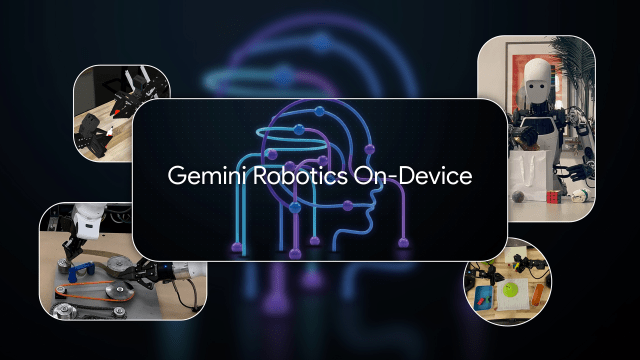
- Google’s new Gemini Robotics On‑Device AI model lets robots run entirely offline
- The model can learn new tasks from just 50 to 100 examples
- It adapts to different robot types, like humanoids or industrial arms, and could be used in rural homes and hospitals
For years, we’ve been promised robot butlers capable of folding your laundry, chopping your onions, and essaying a witty bon mot like the ones in our favorite period dramas. One thing those promises never mention is that accidentally unplugging your router might shut down that mechanical Jeeves. Google claims its newest Gemini AI model solves that problem, though.
Google DeepMind has unveiled its new Gemini Robotics On‑Device AI model as a way of keeping robots safe from downed power lines and working in rural areas. Although it’s not as powerful as the standard cloud-based Gemini models, its independence means it could be a lot more reliable and useful.
The breakthrough is that the AI, a VLA (vision, language, action) model, can look around, understand what it’s seeing, interpret natural language instructions, and then act on them without needing to look up any words or tasks online. In testing, robots with the model installed completed tasks on unfamiliar objects and in new environments without Googling it.
That might not seem like a huge deal, but the world is full of places with limited internet or no access at all. Robots working in rural hospitals, disaster zones, and underground tunnels can’t afford to lag. Now, not only is the model fast, but Google claims it has an amazing ability to learn and adapt. The developers claim they can teach the AI new tricks with as few as 50 demonstrations, which is practically instantaneous compared to some of the programs currently used for robotic training.
Offline robot AI
That ability to learn and adapt is also evident in the robot’s flexible physical design. The model was first designed to run Google’s own dual-arm ALOHA devices, but has since proven capable of working when installed in far more complex machines, like the Apollo humanoid robot from Apptronik.
The idea of machines that learn quickly and act independently obviously raises some red flags. But Google insists it’s being cautious. The model comes with built-in safeguards, both in its physical design and in the tasks it will carry out.
You can’t run out and buy a robot with this model installed yet, but a future involving a robot with this model or one of its descendants is easy to picture. Let’s say you buy a robot assistant in five years. You want it to do normal things: fold towels, prep meals, keep your toddler from launching Lego bricks down the stairs. But your other child wanted to see how that box with the blinking lights worked, and suddenly those lights stopped blinking. Luckily, the model installed in your robot can still see and understand what those Lego bricks are and that you are asking it to pick them up and put them back in their bucket.
That’s the real promise of Gemini Robotics On‑Device. It’s not just about bringing AI into the physical world. It’s about making it stick around when the lights flicker. Your future robot butler won’t be a cloud-tethered liability. The robots are coming, and they are truly wireless. Hopefully, that’s still a good thing.
You might also like
Google’s new Gemini Robotics On‑Device AI model lets robots run entirely offline The model can learn new tasks from just 50 to 100 examples It adapts to different robot types, like humanoids or industrial arms, and could be used in rural homes and hospitals For years, we’ve been promised robot…
