Google DeepMind’s new AI models help robots perform physical tasks, even without training

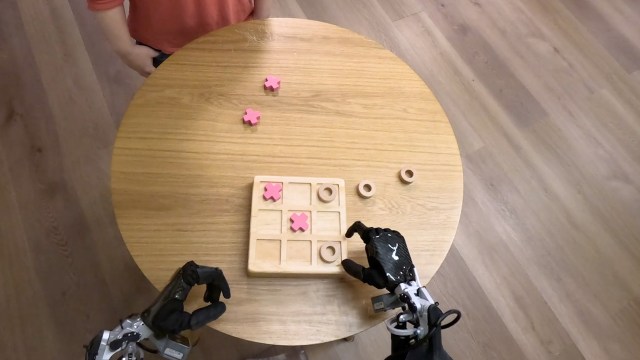
Google DeepMind is launching two new AI models designed to help robots “perform a wider range of real-world tasks than ever before.” The first, called Gemini Robotics, is a vision-language-action model capable of understanding new situations, even if it hasn’t been trained on them.
Gemini Robotics is built on Gemini 2.0, the latest version of Google’s flagship AI model. During a press briefing, Carolina Parada, the senior director and head of robotics at Google DeepMind, said Gemini Robotics “draws from Gemini’s multimodal world understanding and transfers it to the real world by adding physical actions as a new modality.”
The new model makes advancements in three key areas that Google DeepMind says are essential to building helpful robots: generality, interactivity, and dexterity. In addition to the ability to generalize new scenarios, Gemini Robotics is better at interacting with people and their environment. It’s also capable of performing more precise physical tasks, such as folding a piece of paper or removing a bottle cap.
“While we have made progress in each one of these areas individually in the past with general robotics, we’re bringing [drastically] increasing performance in all three areas with a single model,” Parada said. “This enables us to build robots that are more capable, that are more responsive and that are more robust to changes in their environment.”
Google DeepMind is also launching Gemini Robotics-ER (or embodied reasoning), which the company describes as an advanced visual language model that can “understand our complex and dynamic world.”
As Parada explains, when you’re packing a lunchbox and have items on a table in front of you, you’d need to know where everything is, as well as how to open the lunchbox, how to grasp the items, and where to place them. That’s the kind of reasoning Gemini Robotics-ER is expected to do. It’s designed for roboticists to connect with existing low-level controllers — the system that controls a robot’s movements — allowing them to enable new capabilities powered by Gemini Robotics-ER.
In terms of safety, Google DeepMind researcher Vikas Sindhwani told reporters that the company is developing a “layered-approach,” adding that Gemini Robotics-ER models “are trained to evaluate whether or not a potential action is safe to perform in a given scenario.” The company is also releasing new benchmarks and frameworks to help further safety research in the AI industry. Last year, Google DeepMind introduced its “Robot Constitution,” a set of Isaac Asimov-inspired rules for its robots to follow.
Google DeepMind is working with Apptronik to “build the next generation of humanoid robots.” It’s also giving “trusted testers” access to its Gemini Robotics-ER model, including Agile Robots, Agility Robotics, Boston Dynamics, and Enchanted Tools. “We’re very focused on building the intelligence that is going to be able to understand the physical world and be able to act on that physical world,” Parada said. “We’re very excited to basically leverage this across multiple embodiments and many applications for us.”
Google DeepMind is launching two new AI models designed to help robots “perform a wider range of real-world tasks than ever before.” The first, called Gemini Robotics, is a vision-language-action model capable of understanding new situations, even if it hasn’t been trained on them. Gemini Robotics is built on Gemini…
