Google celebrates 1 billion RCS users with emoji-filled messaging features

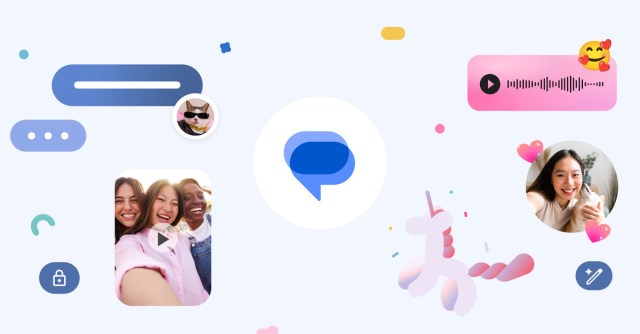
November has been a big month for RCS — the mobile messaging protocol championed by Google — and now, the company is capping it off with the announcement of a milestone and some festive new features. First, the number: according to Google, over 1 billion monthly active users are using RCS in Google Messages. That’s huge considering support was scarce just a handful of years ago, though not entirely surprising since it’s been the default messaging service on Android phones for a few years now.
As for the new messaging features, a couple of them might sound familiar to iOS users. There’s a new feature that ties into your Google account to create a Contact Poster-like profile with your name and photo. Google is adding something called Photomoji, which lets you cut people out of your photos and use the photos to react to messages as you would with an emoji. Apple offers something similar in iOS 17, though you have to turn your photo cutouts into stickers to add them to iMessage conversations. Based on an extremely scientific study of, like, five of my friends, this isn’t catching on very quickly.
Google Messages will also let you attach an emoji when you send a voice message, which Google calls a “mood.” That’s a nice way to help someone get the tenor of your message at a glance. Emoji shared in group chats or used as reactions will sometimes include an animation, too. And in a little nod to the whole green bubble / blue bubble situation, Google Messages will now let you change the color of the chat bubbles on each of your conversations.
I spoke to Android messaging VP and GM Sanaz Ahari about the new features and where RCS is generally, which of course, means asking about Apple. There’s good reason to be excited about RCS on the iPhone because — as Ahari aptly puts it — “group chats are just really, really broken today between Android and iOS.” Apple’s commitment to supporting the RCS universal profile 2.0 means that image and video sharing across platforms will get much better, but Ahari acknowledges that the 2.0 spec doesn’t include end-to-end encryption.
“We are actively working with the GSMA — and Apple is a member of the GSMA — to evolve the spec to include not only end-to-end encryption, but also a lot of features that aren’t in the RCS spec that we’re working on adding back to the spec.” Threaded replies, read receipts, and reactions are a few of those features that are unlikely to be supported for iPhone users as the standard exists today. “Overall, what we hope is that the modern messaging features and end-to-end encryption will be a reality cross-platform.”
That’s all a ways off, but in the meantime, Google’s new messaging features will be trickling out to RCS users on Android phones. Today’s feature drop also includes some handy smart home integrations with Wear OS so you can set your Google Home status, trigger a group of lights, or start a routine from your watch. It all rolls out starting today, with the new messaging features debuting first in open beta.
November has been a big month for RCS — the mobile messaging protocol championed by Google — and now, the company is capping it off with the announcement of a milestone and some festive new features. First, the number: according to Google, over 1 billion monthly active users are using…
