Future exascale supercomputers will be built using these HPE Lego-like cabinets able to hold nearly 100,000 AMD EPYC Cores

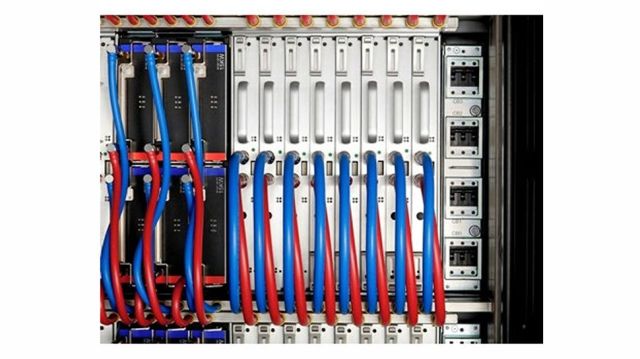
- HPE’s Cray EX4000 supports modular designs, scaling to 98,304 cores
- Slingshot 400 interconnect doubles throughput, vital for exascale systems
- AMD and Nvidia collaborations help compute density exceed 10 petaflops
Future exascale supercomputers will adopt modular designs that allow enhanced scalability and efficiency, new reports have claimed.
TheNextPlatform says Hewlett Packard Enterprise (HPE) is leading this transformation, with its Cray EX4000 systems, which use HPE’s Slingshot interconnect and innovative chassis to support up to 98,304 AMD Epyc cores per rack.
HPE’s interconnect technology is also advancing. The Slingshot 400, expected to be used in “Shasta” Cray EX systems in 2025, builds on the earlier Rosetta architecture and promises 400Gb/sec per port, doubling the throughput of its predecessor.
Staying ahead
This development is vital for managing the massive data loads produced by exascale systems, particularly for AI and scientific simulations.
The Slingshot 400’s improvements to network interface cards and switches show HPE’s drive to stay competitive in a market that includes Nvidia and Broadcom, and TheNextPlatform predicts the company could achieve “800 Gb/sec speeds with a future Slingshot 800 (perhaps in the fall of 2027) and 1.6 Tb/sec speeds with an even further out Slingshot 1600 (perhaps in the fall of 2029).”
On the compute side, HPE’s collaboration with AMD is reflected in its upcoming Cray EX4252 Gen 2 compute blades. These will feature AMD’s Zen 5c-based Epyc 9965 processors, offering 192 cores per CPU.
According to TheNextPlatform, “With eight Epyc 9965s on each blade and 64 blades in one EX4000 chassis, that works out to a total of 98,304 cores in a single liquid-cooled rack.” This setup achieves up to 2 petaflops per rack and with 500 racks, “you could build an all-CPU exascale supercomputer.”
Nvidia, naturally, also plays a key role in HPE’s systems. The forthcoming EX154n blade, expected at the end of 2025, will include Nvidia’s Grace-Blackwell complexes, combining CPUs and GPUs in a unified design. A single cabinet using these components could exceed 10 petaflops.
HPE’s advancements, showcased at the SC24 supercomputing conference, include storage upgrades. The new Cray E2000 all-flash array doubles the performance of its predecessor with PCIe 5.0-enabled NVM-Express drives, ensuring storage keeps pace with compute and network advancements.
By upgrading its lineup from top to bottom and blending cutting-edge compute, networking, and storage technologies, HPE, which already leads the HPC server market, is demonstrating its determination to push the frontiers of high-performance computing and maintain its dominance over the likes of rivals Dell and Lenovo.
You might also like
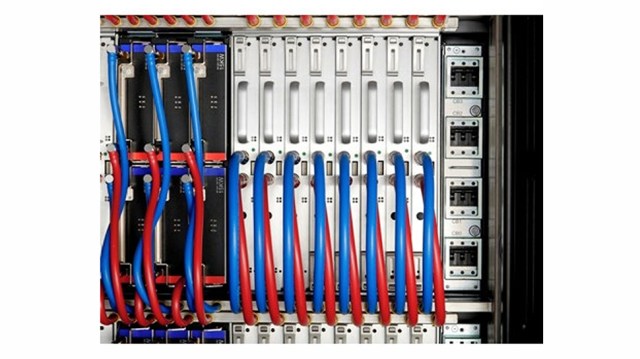
HPE’s Cray EX4000 supports modular designs, scaling to 98,304 cores Slingshot 400 interconnect doubles throughput, vital for exascale systems AMD and Nvidia collaborations help compute density exceed 10 petaflops Future exascale supercomputers will adopt modular designs that allow enhanced scalability and efficiency, new reports have claimed. TheNextPlatform says Hewlett Packard…
