Forget about SEO – Adobe already has an LLM Optimizer to help businesses rank on ChatGPT, Gemini, and Claude

- Adobe wants to help decide how your brand shows up inside ChatGPT and other AI bots
- LLM Optimizer promises SEO-like results in an internet where search engines no longer rule
- Your FAQ page could now influence what AI chatbots say about your brand to customers
Popular AI tools such as ChatGPT, Gemini, and Claude are increasingly replacing traditional search engines in how people discover content and make purchasing decisions.
Adobe is attempting to stay ahead of the curve by launching LLM Optimizer, which it claims can help businesses improve visibility across generative AI interfaces by monitoring how brand content is used and providing actionable recommendations.
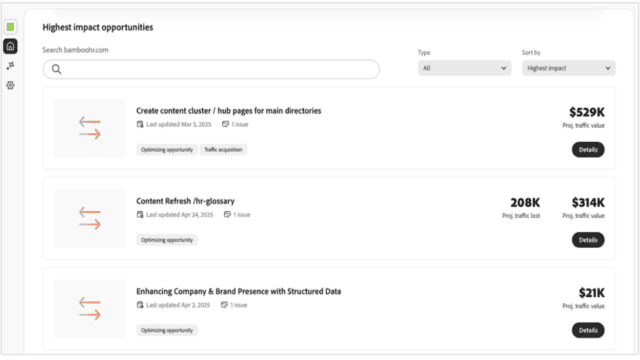
The tool even claims to assign a monetary value to potential traffic gains, allowing users to prioritize optimizations.
Shift from search engines to AI interfaces
With a reported 3,500% increase in generative AI-driven traffic to U.S. retail sites and a 3,200% spike to travel sites between July 2024 and May 2025, Adobe argues that conversational interfaces are no longer a trend but a transformation in consumer behavior.
“Generative AI interfaces are becoming go-to tools for how customers discover, engage and make purchase decisions, across every stage of their journey,” said Loni Stark, vice president of strategy and product at Adobe Experience Cloud.
The core of Adobe LLM Optimizer lies in its monitoring and benchmarking capabilities, as it claims to give businesses a “real-time pulse on how their brand is showing up across browsers and chat services.”
The tool can help teams identify the most relevant queries for their sector and understand how their offerings are presented, as well as enabling comparison with competitors for high-value keywords and uses this data to refine content strategies.
A recommendation engine detects gaps in brand visibility across websites, FAQs, and even external platforms like Wikipedia.
It suggests both technical fixes and content improvements based on attributes that LLMs prioritize, such as accuracy, authority, and informativeness.
These changes can be implemented “with a single click,” including code or content updates, which suggests an effort to reduce dependency on lengthy development cycles.
It is clear the best SEO tool tactics may need to adapt, especially as AI chat interfaces do not operate with the same crawling and ranking logic as standard web browsers.
For users who already rely on the best browser for private browsing or privacy tools to avoid data profiling, the idea that businesses are now optimizing to appear inside chatbots could raise questions about how content is sourced and attributed.
Adobe insists that the tool supports “enterprise-ready frameworks” and has integration pathways for agencies and third-party systems, though the wider implications for transparency and digital content ethics remain to be seen.
You might also like

Adobe wants to help decide how your brand shows up inside ChatGPT and other AI bots LLM Optimizer promises SEO-like results in an internet where search engines no longer rule Your FAQ page could now influence what AI chatbots say about your brand to customers Popular AI tools such as…
