Exclusive: Sony confirms it is killing its formidable 5.5TB cartridge storage solution — clearing the way for emerging ceramic, silica and DNA storage rivals to take its place

Sony has long been a key player in digital storage technologies. The company introduced the CD in 1982, which it developed in collaboration with Philips, revolutionizing how data and music were stored and accessed. In 1995, Sony launched the Digital Versatile Disc (DVD), a joint effort with Philips, Toshiba, and Panasonic. This was followed by the Blu-ray Disc in 2006, which offered even greater storage capacity suitable for high-definition video and data.
In 2014, the company, in partnership with Panasonic, came up with a new optical storage format for professionals, the Archival Disc, which could store a whopping 300GB of data.
The writing has been on the wall for Sony’s older optical solutions for a while however, and the company has said it plans to phase out its recordable disc production, which includes Blu-ays, having previously announced plans to cut a significant number of jobs at its optical media plant in northeast Japan.
Alternatives step up
“The growth of the cold storage market has not reached our expectations, and the performance of the storage media business as a whole continues to be in the red,” a Sony Group spokesperson said. “We have determined that it is necessary to review the business structure to improve profitability.”
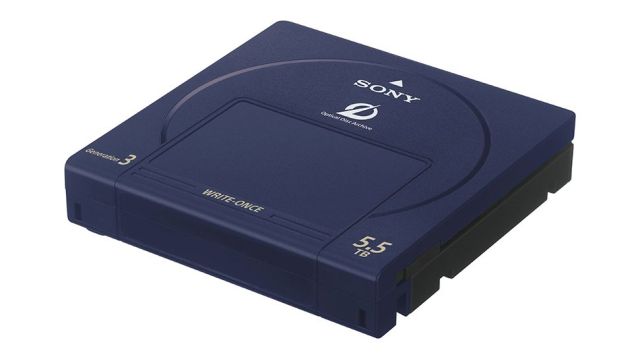
Another casualty of this move will be Sony’s Optical Disc Archive Cartridges. Announced in 2020, Generation 3 of the product has a 5.5TB capacity courtesy of a double-sided disc with triple layers per side for write-once recording. This latest incarnation (and last, as it happens) offers a much greater capacity than Generation 2, released in 2016 (3.3TB), and the initial release, introduced in 2013, which came in various capacities up to 1.5TB.
Sony’s move will mostly impact consumers as the company says it will continue to sell B2B products from existing supplies. It has produced enough to meet demand for quite some time, but if you rely on optical storage you might want to stock up now.
A number of tech companies are working on alternative forms of storage that could fill the void that optical technology’s decline will leave. These include ceramic, Silica (quartz glass), and DNA-based storage.
More from TechRadar Pro

Sony has long been a key player in digital storage technologies. The company introduced the CD in 1982, which it developed in collaboration with Philips, revolutionizing how data and music were stored and accessed. In 1995, Sony launched the Digital Versatile Disc (DVD), a joint effort with Philips, Toshiba, and…
