Exclusive: An affordable 16TB PCIe SSD is on the way — Chinese firm behind world’s first 2TB microSD card plans another world’s first and, yes, we’re chasing a review sample

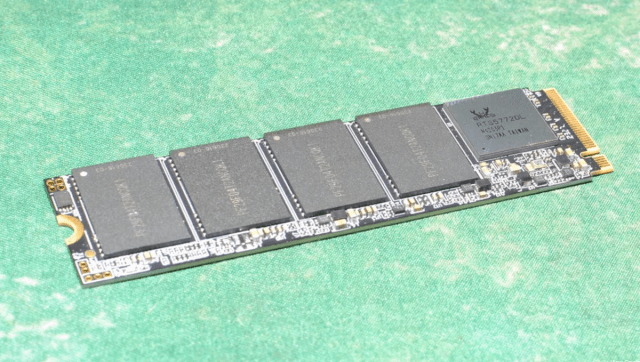
A Chinese company which hit the spotlight earlier in 2024 with the world’s first 2TB microSD card – which we have tested already – now plans to launch a 16TB PCIe NVMe SSD, also a world’s first, at Computex 2024.
Precise details are scant, with AGI’s press release only mentioning, “a 16TB PCIe SSD that leads in the HMB domain, providing unmatched performance” along with a picture of a M.2 2280 SSD.
We don’t know whether it is a 4th or 5th generation PCIe model, if it will have a graphene heatsink but it will almost certainly use QLC parts.
New player in town?
Right now, there are about a dozen 8TB PCIe NVMe SSDs; shaped like a stick of chewing gum, they are popular upgrades for mobile workstations, mini PCs, PS5 gaming consoles or SSD NAS where their data density counts.
They do carry a significant premium: At the time of writing, the cheapest model is the Sabrent Rocket Q NVMe which is a PCIe 3.0 part and retails for $800. A 16TB SSD based on the same price per TB would fetch a whopping $1,600, if not more given that it is a premium model.
That’s a bit more expensive than, say the enterprise-focussed Solidigm D5-P5316, which starts from $1,490 but the latter is a 2.5-inch SSD – so is far larger and won’t fit in a laptop – and has a smaller capacity.
8TB SATA SSD could be a bargain
As for the acronym HMB, it refers to a technology called Host Memory Buffer which is a popular way for manufacturers to cut down costs by removing DRAM components while maintaining performance; doing so also frees space for additional memory chips to be added.
AGI also plans to unveil an 8TB SATA SSD which will compete with the Samsung 870QVO, the most popular drive of this size and one which retails for around $600. The unnamed device is expected to push “the limits of consumer-grade storage, setting a new benchmark for capacity” and will most likely integrate its current AI238 family, one which comes with a three-year warranty.
The company also produces portable SSDs, USB flash drives as well as DDR5 and DDR4 memory modules. We have contacted AGI for review samples and for additional details regarding these products. We will update the article in due course.
The appetite for large capacity SSDs in the consumer market is far too small, which explains why most laptops selling under $1,000 come with up to 2TB. The advent of cloud storage coupled with the ability to run software as a service (i.e. from the cloud) means that 2TB is plenty for most.
In addition, large laptops (15.6-inch upwards) often have a spare SSD slot which means you can add another empty SSD for extra capacity, removing the need to go for the biggest model at a premium.
More from TechRadar Pro
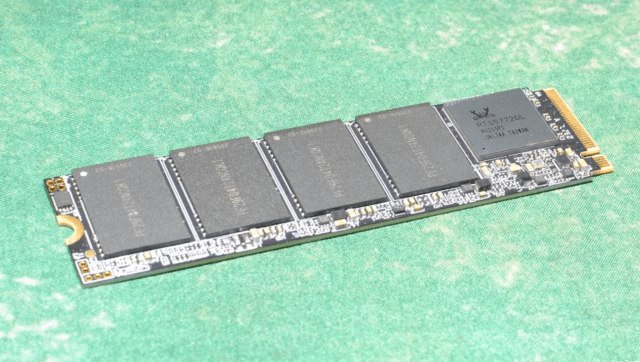
A Chinese company which hit the spotlight earlier in 2024 with the world’s first 2TB microSD card – which we have tested already – now plans to launch a 16TB PCIe NVMe SSD, also a world’s first, at Computex 2024. Precise details are scant, with AGI’s press release only mentioning,…
