Every phone, TV, and radio in the US will get an emergency alert today — here’s how

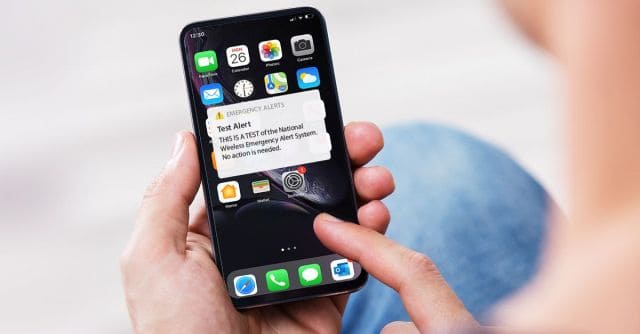
As a reminder, at about 2:20PM ET on Wednesday, October 4th, your phone will probably make a loud noise and show a message that reads, “THIS IS A TEST of the National Wireless Emergency Alert System. No action is needed.” A similar message will be broadcast over the air to TVs and radios that are turned on during the test. That’s because the government is testing its nationwide alert systems, which it’s required to do at least every three years.
The test is a big lift, requiring the coordinated effort of the government, wireless carriers, cable and satellite providers, and local broadcasters. All of the major wireless carriers in the country will, during a 30-minute window, transmit the test to all of their subscribers’ phones that are within range of a cell tower and capable of receiving it.
Simultaneously, TVs and radios that are turned on and tuned to either over-the-air broadcasts or actively showing cable and satellite feeds will play a similar message to those shown on cell phones. FEMA writes on a page about the Emergency Alert System that this is done “in close partnership with state, local, tribal, and territorial authorities.”
All of this is made possible by FEMA’s Common Alerting Protocol (CAP), which it calls “a digital format for exchanging emergency alerts.” It lets broadcasters, cable and satellite providers, and wireless cell service providers send a message that can include images, streaming video and audio, and text, and it can be used nationwide, as it will be today, or to target specific areas for localized disasters. FEMA says it’s limited “only by the capacity of the delivery system used.”
CAP can even be used for edge cases like emergency telephone networks, sirens, or digital road signs, and a page on FEMA’s site indicates these alerts could be — and, in some cases, are — sent via computers, game consoles, search engines, social media, and other types of platform. Imagine you’re watching a Twitch stream and an alert comes up.
The test coming today ran most recently in 2021, but you could opt out of that one. This year, just like the Presidential Alert test that went out in 2018, everyone gets it, regardless of their phones’ settings.
According to a FAQ on the FEMA website, the test won’t interrupt a phone call. FEMA also says that cell phone users won’t get the alert “if a phone is off before the test alert is sent and not turned back on until after the WEA Test expires (approximately 30 minutes).”
As a reminder, at about 2:20PM ET on Wednesday, October 4th, your phone will probably make a loud noise and show a message that reads, “THIS IS A TEST of the National Wireless Emergency Alert System. No action is needed.” A similar message will be broadcast over the air to…
