Europe’s warming up at nearly twice the global average, says new report

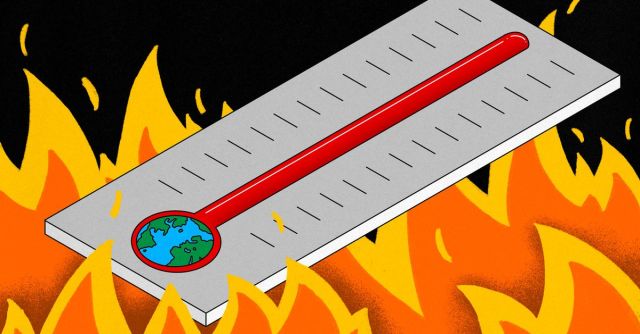
Europe is warming up at twice the global average, leading to deadly heatwaves and severe flooding, according to the European State of the Climate (ESOTC) report for the year 2023, released Monday.
According to the report, temperatures in Europe are rising 2.3 degrees Celsius (or 4.1 degrees Fahrenheit) above preindustrial levels, according to a five-year average, compared to 1.3 degrees Celsius (roughly 2.3 degrees Fahrenheit) globally. The report, jointly issued by the Copernicus Climate Change Service (C3S) and the United Nations’ World Meteorological Organization, covers the year 2023, which was the second warmest year on record for Europe. Parts of southern Europe experienced between 60 and 80 days of “strong heat stress,” with southern Spain being hit the hardest with over 80 days of “very strong heat stress.” Meanwhile, northern Europe experienced many days with “extreme cold stress,” with central Iceland experiencing up to 100 days when temperatures were between negative 16.6 degrees and negative 40 degrees Fahrenheit.
Heat-related deaths, such as from heatstroke and heat exhaustion, have increased by almost 30 percent over the last 20 years, the report also found. Last summer brought heatwaves to much of southern Europe, putting older adults and outdoor workers particularly at risk. The continent also experienced severe floods and wildfires, with the largest wildfire in Europe’s recorded history hitting Greece.
The ESOTC report for 2023 is the latest data point in a grim trend that has been documented for a while. Over the past three decades, Europe’s temperatures have risen twice as much as the rest of the world. Climate experts say this is largely due to Europe’s geographic positioning: the continent is directly below the Arctic, the fastest-warming region in the world. It’s also surrounded by rapidly warming oceans. The rates of surface ocean warming for the eastern Mediterranean Sea, the Baltic and Black seas, and the southern Arctic are three times more than the global average, scientists from the World Meteorological Organization and C3S concluded last year.
One positive development is that Europe is rapidly transitioning to renewable sources of energy. 2023 was the second year that Europe generated more of its electricity from solar, wind, and other renewables than fossil fuels.
Europe is warming up at twice the global average, leading to deadly heatwaves and severe flooding, according to the European State of the Climate (ESOTC) report for the year 2023, released Monday. According to the report, temperatures in Europe are rising 2.3 degrees Celsius (or 4.1 degrees Fahrenheit) above preindustrial…
