Democrats ask how Trump’s government will regulate Trump Mobile

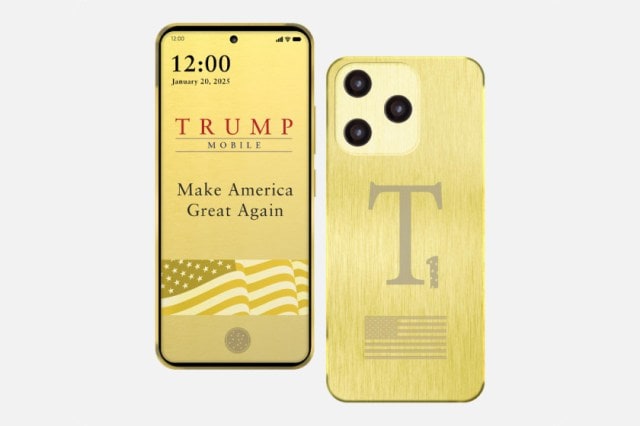
When a Trump-branded phone on a Trump-branded mobile network launches sometime this year (if all goes according to plan), US regulators will face what’s become a recurring conundrum in Donald Trump’s presidency: how to regulate a product with ties to the head of state.
Six Democratic lawmakers are confronting key federal agencies with that very question in a letter shared exclusively with The Verge. Led by Sen. Elizabeth Warren (D-MA), the lawmakers ask the Federal Communications Commission (FCC), Federal Trade Commission (FTC), Food and Drug Administration (FDA), the departments of Commerce and Treasury, and US Trade Representative’s (USTR) Office about how they’ll avoid “undue political influence” and what they’d do if they were asked by the White House to stop investigating potentially unlawful practices by Trump Mobile.
The lawmakers, including Sens. Richard Blumenthal (D-CT), Adam Schiff (D-CA), Chris Van Hollen (D-MD), as well as Reps. Doris Matsui (D-CA) and Greg Casar (D-TX), singled out the six entities because of the role they could play in regulating Trump Mobile’s operations. The FCC is tasked with regulating mobile virtual network operators (MVNOs) like Trump Mobile across state lines. The FTC enforces laws against consumer deception, including claims of products being made in the US, as the Trump Mobile phone was initially said to be. The FDA regulates medical devices including some software apps, which could include the telehealth service that Trump Mobile claims can help read vital signs with a phone camera.
The departments of Commerce and Treasury and the USTR oversee tariff policy, which the lawmakers fear could be exploited to benefit Trump Mobile. They note that Trump exempted smartphones from his tariffs after meeting with and receiving a million-dollar donation from Apple CEO Tim Cook, and “the opportunities for corruption and self-dealing will be even greater as Trump Mobile ramps up its business.”
The lawmakers acknowledge that Trump Mobile says its offerings are not “designed, developed, manufactured, distributed or sold by The Trump Organization or any of their respective affiliates or principals.” But selling a trademark license for the Trump name can still be lucrative for the president, since the company that controls it is owned by his trust. The president earned $8 million by licensing his name to products last year, NPR reported. It’s not the first time that Trump family businesses have raised potential conflict of interest concerns — critics warned that the president’s support for bills boosted by the cryptocurrency industry could ultimately help his own family’s stablecoin ventures, even though the White House says Trump’s own assets are in a trust managed by his kids.
“Trump Mobile offers yet another avenue for tech and telecom companies to purchase influence with President Trump, such as by offering Trump Mobile favorable conditions for MVNO arrangements like preferential network access or pricing arrangements, making their proprietary apps available on the Trump Mobile platform, or selling T1 devices in their stores,” they write. “It is critical that federal regulators continue to evenhandedly enforce competition and consumer protection laws against Trump Mobile and any companies with which it works, especially in the face of this opportunity for corruption and self-dealing for President Trump.”
When a Trump-branded phone on a Trump-branded mobile network launches sometime this year (if all goes according to plan), US regulators will face what’s become a recurring conundrum in Donald Trump’s presidency: how to regulate a product with ties to the head of state. Six Democratic lawmakers are confronting key…
