Data centers could be used as residual power generators as researchers generate 500MWh in a year from a single DC by recycling wasted wind
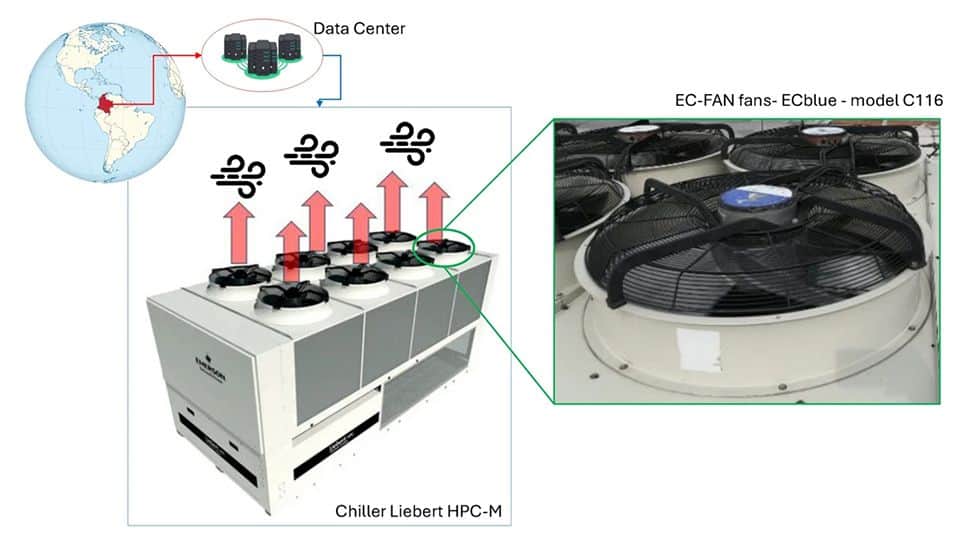
The challenge of powering energy-intensive AI data centers is a growing concern for companies like Microsoft and Oracle who are exploring options like nuclear power, but now, researchers from the Distance University of Madrid (UDIMA) in Spain and Mision Critica-Data Center in Bogotá, Colombia have approached the energy issue differently.
Rather than focusing on powering a data center, they are exploring how these facilities can generate their own electricity by harnessing the airflow produced by cooling fans, effectively turning the waste wind into a source of renewable energy.
HVAC systems common in data centers expel warm air outdoors, creating a consistent, untapped wind resource that can be converted into electricity. In a case study of a Colombian data center, the researchers used vertical axis Tesup V7 wind turbines to capture this man-made waste wind. The turbines, installed atop chillers, were chosen because they minimized size and weight while maximizing electricity generation.
Applying the method to other industries
The amount of gross electricity produced annually by six wind turbines was 513.82MWh from artificial airflow, exceeding the energy consumption of the facility’s fans, and providing a surplus of 131.2MWh. The authors suggest this recycled energy can be used for other electrical needs within the data center or be injected into the electrical grid.
The study, published in the journal Scientific Reports, also highlighted the economic and environmental benefits. A positive cash flow is achieved by the third year, with an impressive internal rate of return of 50.69%. Environmentally, the system reduces CO2 emissions by approximately 300 metric tons annually.
The authors say this approach not only offers a sustainable energy solution but also aligns with several UN Sustainable Development Goals, promoting clean energy and climate action. The potential for applying this method to other industries with similar airflows could significantly impact global energy consumption, they say.
“By adopting proactive policies and encouraging innovation, we can significantly reduce our environmental impact, save energy, and move towards a more sustainable world for future generations,” the report concludes.
More from TechRadar Pro

The challenge of powering energy-intensive AI data centers is a growing concern for companies like Microsoft and Oracle who are exploring options like nuclear power, but now, researchers from the Distance University of Madrid (UDIMA) in Spain and Mision Critica-Data Center in Bogotá, Colombia have approached the energy issue differently.…
