Cooling data centers is a multi-billion dollar problem – now researchers want to use a common cooling mechanism found in animals to solve it

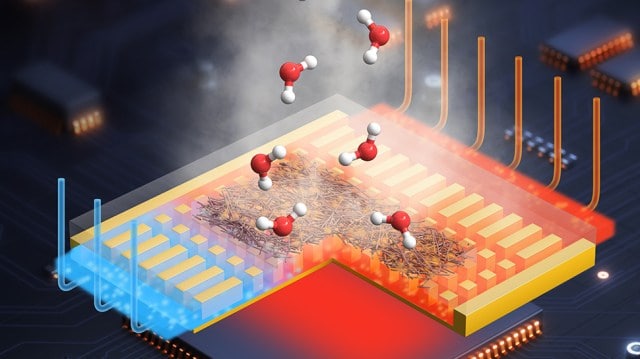
- Evaporative cooling, like sweating, could reduce energy use in data centers
- New fiber membrane handles heat with zero added energy use
- Researchers retool filtration material to cool electronics passively
As AI and cloud computing grow, the rising demand for data processing is driving up heat output, with cooling already making up nearly 40% of a data center’s energy use and projected to more than double worldwide by 2030.
Researchers at the University of California San Diego have developed a new cooling technology that mimics the way animals regulate body temperature… through sweating.
The passive system removes heat from electronics using evaporation, offering a potential alternative to traditional cooling methods in data centers and other high-powered computing environments.
Finding the “sweet spot”
The core of the system is a fiber membrane with a network of tiny, interconnected pores that use capillary action to draw cooling liquid across the surface.
As the liquid evaporates, it efficiently removes heat without requiring extra energy.
“Compared to traditional air or liquid cooling, evaporation can dissipate higher heat flux while using less energy,” said Renkun Chen, a professor in the Department of Mechanical and Aerospace Engineering at UC San Diego. Chen co-led the project with professors Shengqiang Cai and Abhishek Saha.
The research was published in the journal Joule, explaining how Chen’s team, including Ph.D. student Tianshi Feng and postdoctoral researcher Yu Pei, tested the membrane under variable heat conditions.
It handled over 800 watts per square centimeter of heat, a record for this type of cooling system. It also performed consistently over several hours.
Traditional porous membranes have often failed due to clogging or boiling. Chen explained that the team found a “sweet spot” with the membrane’s pore size and structure.
“These fiber membranes were originally designed for filtration, and no one had previously explored their use in evaporation,” said Chen. “We recognized that their unique structural characteristics – interconnected pores and just the right pore size – could make them ideal for efficient evaporative cooling. What surprised us was that, with the right mechanical reinforcement, they not only withstood the high heat flux–they performed extremely well under it.”
The researchers believe the membrane is still operating below its full potential.
They are now refining the design and working on ways to integrate it into cold plates, flat devices used to cool chips like CPUs and GPUs.
The group is also preparing to commercialize the technology through a startup. Their goal is to provide scalable, low-energy cooling solutions as global data demand continues to grow.
Via Tech Xplore
You may also like
Evaporative cooling, like sweating, could reduce energy use in data centers New fiber membrane handles heat with zero added energy use Researchers retool filtration material to cool electronics passively As AI and cloud computing grow, the rising demand for data processing is driving up heat output, with cooling already making…
