CES 2024 was all about interoperability beyond the smart home

Last year, you couldn’t mention CES without bringing up Matter. It was a pivotal year for the smart home standard, as big names like Samsung, GE, and Amazon promised better interoperability between their devices and a world of sensors, appliances, and accessories. But that promise largely started and ended with smart home tech.
This year, things were a little different at CES: the idea of making products work nicely across ecosystems bled into other areas of the showcase and rippled across a range of different devices — even putting rivals on the same page to better serve users.
Google, for instance, revealed several updates to Android that show a clear push toward interoperability. One of Google’s biggest updates was to Nearby Share, the Android equivalent of AirDrop that lets users share files with other devices that are close by. Instead of going it alone, Google announced that it’s combined Nearby Share with Samsung’s own take on the feature, called Quick Share. The newly merged sharing system will adopt Samsung’s Quick Share label and bring the “best” of both companies’ “sharing solutions together into a singular cross-Android solution,” according to Google. That should make it easier to share files across both Samsung and Pixel devices.
That’s not all for big tech brands. Samsung is expanding on its partnership with Microsoft, enabling Galaxy owners to use their phones as a webcam in the Microsoft Teams apps. LG is bringing Android’s Quick Share to Windows PCs as a preinstalled app. And LG’s TVs are adding Chromecast built in, letting users cast content from their mobile devices and use their phones as remotes. These are all small steps, but they’re examples of companies working with sometimes-competitors to make experiences that are simply better for users.
Amazon is pushing ahead with an even bolder attempt to make apps and devices interoperable. It adopted the open Matter Casting protocol, a standard that aims to make video casting available from all devices. Instead of making the feature dependent on specific hardware, it only requires that the app users are casting from, and the app on the device they want to cast to, support Matter Casting. For now, the move only allows users to cast Prime Video content from their phone to the Echo Show 15, but it will soon support Fire TVs, including those made by Panasonic. Other streaming apps like Plex, Pluto TV, Sling TV, Starz, and ZDF are also working on adding support.
Perhaps the most significant shift toward interoperability at CES was the widespread support for Qi2.
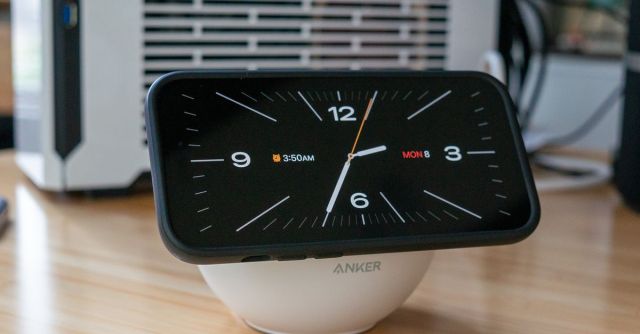
But perhaps the most significant shift toward interoperability at CES was the widespread support for Qi2: the charging standard that could finally allow both Android phones and iPhones to wirelessly charge with the same chargers at the same 15W rate. Things are still early — only the iPhone 13, 14, and 15 support the standard so far. However, Qi2-compatible Android devices are bound to show up soon, and many Android phone cases already come with magnetic charging support. Qi2 will allow both iPhone and (eventually) Android users to take advantage of more powerful wireless charging capabilities without paying Apple for a MagSafe charger, the tech on which the Qi2 standard is based. The first Qi2 chargers from Belkin, Anker, and Satechi have already made appearances at CES, giving users a lot of options to start.
Although the theme of interoperability extended beyond the smart home this year, that doesn’t mean there weren’t any significant updates to home tech. The Home Connectivity Alliance, which is backed by companies like LG and Samsung, launched a new Energy Management Interface Specification. It’s supposed to make it easier for users to connect their devices to the energy-saving smart grid, no matter the brand.
All of these small strides toward interoperability are promising, but many still leave space where other companies need to get on board to help. It’s hard to see Apple implementing Matter Casting on its native apps, for example, and one might even argue that the new standard just complicates things since we already have two widespread (albeit proprietary) options, Chromecast and AirPlay. That reality is always lingering behind the utopian facade exuded by CES, but it was still nice to finally see more tech rivals come together under one roof — and not just on the same show floor.
Last year, you couldn’t mention CES without bringing up Matter. It was a pivotal year for the smart home standard, as big names like Samsung, GE, and Amazon promised better interoperability between their devices and a world of sensors, appliances, and accessories. But that promise largely started and ended with…
