Apple’s failure to develop its own modem detailed in new report

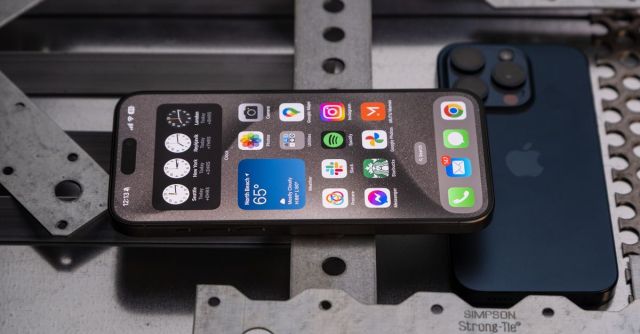
Apple recently extended its deal for Qualcomm modems despite years of effort to develop its own — now we know why. According to a detailed report from the Wall Street Journal, Apple’s attempt to develop its own in-house 5G modem has been stymied by issues resulting from the iPhone maker underestimating the complexity and technical challenges of the task, and a lack of global leadership to guide the separate development groups siloed in the US and abroad.
Apple’s motivation to develop its own modems is reportedly two-fold. First, developing its own silicon had helped improve device performance and increase profit margins. Second, the company wanted to break from Qualcomm, which Apple sued in 2017 over excessive patent fees. “They hate Qualcomm’s living guts,” says Edward Snyder, a wireless industry expert and managing director of Charter Equity Research, in comments reported by the WSJ. After settling its dispute with Qualcomm in 2019, Apple quickly acquired Intel’s smartphone modem business, along with a few thousand engineers to help advance its development efforts.
Three years behind Qualcomm’s best modem chip
But building a 5G wireless modem that also worked well on the myriad of 2G, 3G, and 4G wireless frequencies in use around the world turned out to be much trickier than expected, and the effort has been plagued by unrealistic goals and deadlines, reports the WSJ. The prototype chips Apple tested last year were slow, “essentially three years behind Qualcomm’s best modem chip.”
Here’s my favorite sentence from the WSJ report:
Apple found that employing the brute force of thousands of engineers, a strategy successful for designing the computer brain of its smartphones and laptops, wasn’t enough to quickly produce a superior modem chip.
So instead of introducing custom Apple modems in this year’s iPhone as originally planned, Apple execs had to push plans back to 2024 models, until they realized that goal wasn’t possible either. That’s why Apple extended its modem deal with Qualcomm — which would have expired at the end of this year — just days before the iPhone 15 was announced.
And while some have lauded Huawei’s HiSilicon chip design business for beating Apple to the punch with the apparent development of its own 5G modem in China’s Mate 60 Pro, lab tests show that Huawei’s chips consume more power than competitors’ and cause the phone “to heat up” which is bad for performance.
So yeah, modems are hard.
Apple’s custom modem work continues, and Bloomberg’s Mark Gurman suggests we’ll likely see them gradually roll out before the current Qualcomm deal expires in 2026.
Apple recently extended its deal for Qualcomm modems despite years of effort to develop its own — now we know why. According to a detailed report from the Wall Street Journal, Apple’s attempt to develop its own in-house 5G modem has been stymied by issues resulting from the iPhone maker underestimating…
