Though it started out pretty chill, over the years, Animal Crossing: Pocket Camp steadily became bloated with monetization. There were all kinds of things to spend real money on, including loot boxes for unlocking rare items. When I logged in to the game last week after months away, my screen was dominated by notifications vying for my attention, most of them involving spending some kind of cash.
Animal Crossing: Pocket Camp is much better without microtransactions

That’s what makes the new paid version of the app so intriguing. The original Pocket Camp has technically shut down, replaced by Pocket Camp Complete, which gets rid of all the in-app purchases in exchange for a one-time fee. (It’s $9.99 at launch on both iOS and Android, which will jump to $19.99 in January.) And without the looming specter of having to spend real money, this version of Pocket Camp is a whole lot more relaxing.
Fundamentally, the game is the same. You’re tasked with running a campground for a bunch of friendly animals, which involves designing various spots for them to hang out, while also doing traditional Animal Crossing activities like fishing and catching bugs. The game allows existing Pocket Camp players to transfer their saves — all you need to do is link a Nintendo account — and I found the process pretty seamless. I simply logged in to the new app, and my old campground, along with the seven years’ worth of stuff I’d accumulated, was there waiting for me.
In the original version, you could spend money on a currency called Leaf Tickets that let you do a lot of things, like speeding up crafting and plant growth or unlocking additional treasures from the seafaring Gulliver. The most notorious thing you could buy with Leaf Tickets were fortune cookies, which are essentially loot boxes: eat one, and you got a random item tied to a themed set. But you never knew what you’d get, so if you were after a particular item to finish off your campground cafe, it was easy to spend a lot on cookies.
In Complete, Leaf Tickets have been replaced by Leaf Tokens. Fundamentally, the tokens are the same. But crucially, you can’t buy them with real cash; you either earn them in-game by completing quests or buy them with bells, Animal Crossing’s in-game currency. Psychologically, this makes a huge difference. It never feels like the game is trying to cheat me out of actual money, since I can’t actually spend any. Instead, they’re a nice bonus that I can save up to buy cool things or speed up an annoyingly long renovation.
You can still feel the previous monetization inherent in Complete’s design; the loot box cookies remain, as do some of the more annoying features, like treasure maps that require very specific items to explore. I would love to see a version of Pocket Camp that was designed from the ground up to be a one-time paid experience. But even if the free-to-play seams show, Complete is still a much more enjoyable experience simply by removing the ability to spend real cash.
a:hover]:text-gray-63 [&>a:hover]:shadow-underline-black dark:[&>a:hover]:text-gray-bd dark:[&>a:hover]:shadow-underline-gray [&>a]:shadow-underline-gray-63 dark:[&>a]:text-gray-bd dark:[&>a]:shadow-underline-gray”>Image: Nintendo
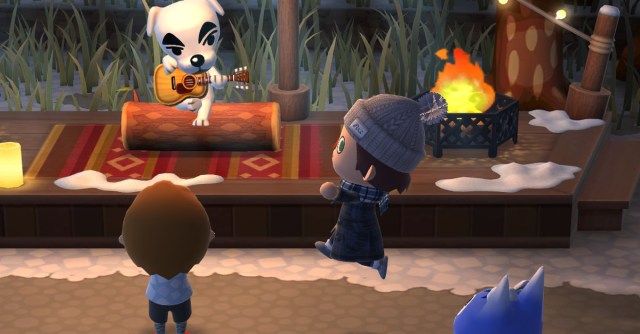
On top of that, Complete adds a handful of genuinely good features. There’s a new location where you can hang out with your human friends and listen to a K.K. Slider concert, and you can now assign a caretaker animal for your campground, who will do some of the busywork when you’re away from the game. There are also friend cards that make it a little easier to find and play with other people.
Perhaps most interesting, there’s a new connection with New Horizons; Pocket Camp players can import certain custom designs from the Switch game, which really expands options for clothing in particular. During the height of New Horizons’ popularity, players (and also brands) made all kinds of impressive things, and I’ve spent too much time digging through old creator codes to find stuff to wear. It’s not perfect — not all designs are compatible, and some show up fairly pixelated in the mobile game — but at least I can finally wear a Montreal Expos cap when I grab a coffee from Brewster.
Nintendo’s mobile ambitions didn’t quite take off the way many of us expected when Shigeru Miyamoto stood onstage at an Apple event to introduce Super Mario Run. That game didn’t make profit the way Nintendo had hoped, and the company’s subsequent mobile games, like Fire Emblem Heroes and Mario Kart Tour, are all heavily monetized. That was the case for Pocket Camp, too — but its new iteration provides a brief glimpse at an alternate timeline where Nintendo’s smartphone games aren’t always trying to sell you something.
Though it started out pretty chill, over the years, Animal Crossing: Pocket Camp steadily became bloated with monetization. There were all kinds of things to spend real money on, including loot boxes for unlocking rare items. When I logged in to the game last week after months away, my screen…
