Android Automotive gets major update with native Max and Peacock streaming

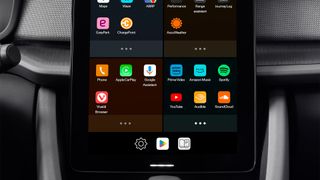
Google has revealed that it is adding several apps, including Max and Peacock, to its Android Automotive infotainment platform, which is the OS used by the likes of Volvo, Polestar and Renault, plus upcoming models from Porsche.
Ford, Acura, Honda, Buick and Cadillac are a number of additional manufacturers that harness the power of Android Automotive with Google Automotive Services (GAS), which allows those brands to offer Google Maps, Google Play and Google Assistant natively on in-car displays – a different proposition to Android Auto, which is simply a smartphone screen mirroring device.
Now, drivers and passengers alike will be able to take advantage of two new streaming services in the US – Max and Peacock – as well as the ability to play the Angry Birds game. The catch? Most vehicles offering gaming and video streaming understandably have to be parked before these services can be legally accessed.
That said, Porsche revealed late last year that both its Macan EV and revised Panamera will feature optional passenger displays that allow access to gaming and video streaming services while moving thanks to its special privacy coating that means the driver can’t see what is displayed on the screen.
According to The Verge, Android Auto is also being treated to an update, chiefly in the form of unlocking the Uber app on any vehicle display compatible with Android smartphones. This will allow Uber employees to access their interface via the infotainment screen, rather than relying solely on a smartphone mounted somewhere on the dash.
Auto Evolution also stated that the Android Auto update will encompass web browsers, meaning users will be able to access websites on the infotainment display without unlocking a tethered smartphone. Vivaldi and Google Chrome are already available natively on vehicles running the Android Automotive OS.
Analysis: Google speeds up in-car entertainment
Tesla has long been offering its customers the chance to catch up on TV shows, movies and music with Netflix, Spotify and YouTube, as well as enjoy a number of top-tier games, thanks to its user-friendly and app-compatible operating system. But the rest of the auto world has been frantically playing catch up over recent years.
This is because a number of the world’s most recognized brands have historically opted to create their own infotainment platforms, compromising usability by annexing those customers who simply want a familiar Android or iOS experience.
However, the more recent adoption of Android Automotive as a platform means those same car brands can leave the time consuming and costly dev work to Google, while simultaneously offering their customers what they really want – access to their favorite apps inside the vehicle.
It appears that Google is slowly ramping up its in-car entertainment offering, but the recent update is predominantly aimed at the US market, where the likes of Max and Peacock are available.
We will have to wait and see whether similar updates roll out across Europe and further afield, an important factor given that Renault, Porsche, Volvo and Polestar are all clock up huge sales figures outside of the US.
You might also like

Google has revealed that it is adding several apps, including Max and Peacock, to its Android Automotive infotainment platform, which is the OS used by the likes of Volvo, Polestar and Renault, plus upcoming models from Porsche. Ford, Acura, Honda, Buick and Cadillac are a number of additional manufacturers that…
