AMD’s answer to Nvidia’s Frame Gen graphics may be coming in September

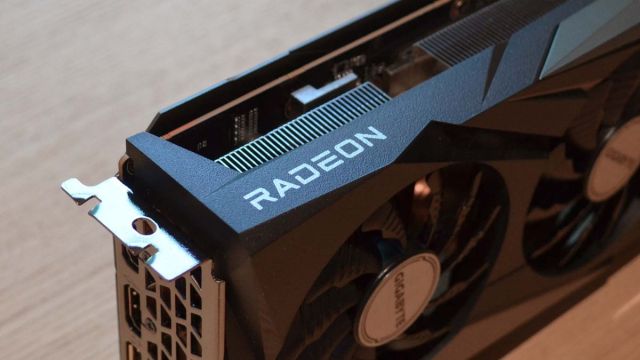
AMD announced its answer to Nvidia’s DLSS 3 with Frame Generation graphics technology back in 2022, officially dubbed FSR 3 graphics scaling with Fluid Motion Frames technology. AMD had gone into great detail on FSR’s progress since then during its GDC 2023 presentation to developers in March, detailing the progress from version 1 to its current version 3.
According to a new report from YouTube channel Moore’s Law is Dead (reported on by PC Gamer), the technology will be launching in September 2023. It seems that the tech giant will release FSR 3 with Fluid Motion to tie into its new RDNA 3 graphics cards. And considering that CEO Lisa Su herself confirmed the imminent arrival of RDNA 3 during AMD’s earnings call for the Q2 fiscal, this only bolsters the rumor’s porobability even more.
This launch is especially important to AMD, as Frame Generation tech in Team Green’s graphics cards gives it a huge advantage over Team Red, since gamers can see the noticeable improvement in resolution and gamplay frames per second. We’ll see for certain if the FSR tech can match DLSS 3 Frame Generation if this report turns out to be true.
Will AMD finally catch up?
Nvidia’s Frame Gen uses AI-enhanced hardware to upscale resolution by creating new frames and inserting them between already rendered GPU frames. Though this improves the fluidity and visual smoothness of games during the rendering process, it also has the drawback of increasing latency and input lag.
Meanwhile, both DLSS and FSR improve framerate and latency. And though matching DLSS was enough for AMD until now, as its FSR tech is quite competitive in resolution scaling, the fact that it had no answer for Nvidia’s Frame Gen created a huge gap between the graphics card manufacturers in terms of gaming frame rates.
But now with Fluid Motion rolling out with FSR 3, Team Red has a shot to truly compete with Team Green, as long as said tech is fully ready by September. Otherwise, AMD will spend another generation playing catch-up, which would be especially diffilcult for AMD considering that Nvidia controls so much of the graphics card market share.
AMD does have a chance, though, as we’ve seen how much FSR 2 closed the gap between it and DLSS 2.0, Nvidia’s previous version of its upscaling technology. Hopefully Team Red does it again, as healthy competition between these two giants is something that always benefits consumers.
AMD announced its answer to Nvidia’s DLSS 3 with Frame Generation graphics technology back in 2022, officially dubbed FSR 3 graphics scaling with Fluid Motion Frames technology. AMD had gone into great detail on FSR’s progress since then during its GDC 2023 presentation to developers in March, detailing the progress…
