A sodium-ion portable power bank comes to market

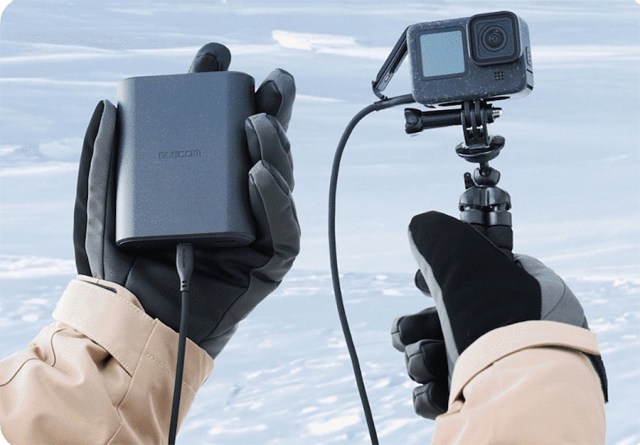
Accessory maker Elecom has announced what it’s claiming to be the first consumer-ready power bank that uses a sodium-ion battery instead of lithium-ion one, as spotted by Notebookcheck. In addition to being more environmentally friendly to manufacture, the 9,000mAh Na Plus can be used in extreme temperatures with less risk of overheating, and has — Elecom claims — a lifespan of almost 5,000 charges. Even if you’re recharging it every single day, after 13 years it should still be providing power.
Sodium-ion battery technology is new compared to lithium-ion tech, and production capacities haven’t reached the level of lithium-ion batteries. So while a little deal-hunting can get you a basic 10,000mAh lithium-ion power bank from companies like Anker for less than $20, the Na Plus is debuting in Japan (in black and light gray color options) for 9,980 yen, or around $67. Elecom hasn’t yet announced a wider rollout.
Power output maxes out at 45W through a single USB-C port, or 18W through the Na Plus’ lone USB-A port. A series of LEDs can be used to determine the power bank’s remaining power level, and it takes about two hours to fully charge it.
Performance-wise, the Na Plus definitely isn’t the most capable portable charger you can buy. What’s inside is what’s most exciting. Although lithium-ion technology has dominated batteries since the early ‘90s, lithium isn’t an unlimited resource, and mining it (as well as other metals used in batteries like cobalt and nickel) involves energy-intensive processes that can pollute local ecosystems.
Sodium-ion batteries — like the name might suggest — function similarly to lithium-ion ones, but with sodium instead of lithium. Sodium is more abundantly available and much easier to produce. Sodium-ion batteries are also safer to use. Elecom says the Na Plus can operate in temperatures ranging from around -30 to 122 degrees Fahrenheit and is at less risk of fires caused by overheating and thermal runaway.
The price tag on this technology might drop in the future as the supply chain expands and production increases. But doing those things likely won’t solve this other drawback: sodium-ion batteries are simply bigger all around. These batteries have a lower energy density compared to lithium-based batteries, meaning they have to be larger and heavier to store an equivalent amount of energy. Case in point: that 10,000mAh lithium battery from Anker weighs around 213 grams, while the 9,000mAh Na Plus is 350 grams and much bulkier.
Sodium-ion batteries might be better suited for applications where size isn’t the primary concern, such as storage systems for renewable energy sources, backup power supplies, or powering vehicles like cargo ships. The Na Plus might be bulky and expensive, but it’s still exciting to see this technology finally reach consumers.
Accessory maker Elecom has announced what it’s claiming to be the first consumer-ready power bank that uses a sodium-ion battery instead of lithium-ion one, as spotted by Notebookcheck. In addition to being more environmentally friendly to manufacture, the 9,000mAh Na Plus can be used in extreme temperatures with less risk…
