A smartphone that can charge itself from sunlight — scientists have created transparent solar cells that can be embedded in glass

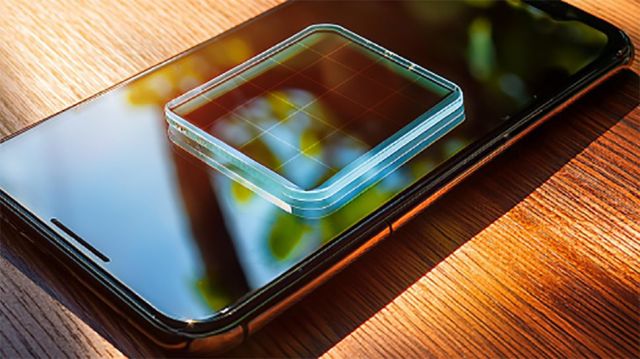
Imagine a world where your smartphone charges itself simply by being exposed to sunlight, with no cords or power outlets required.
Researchers have long sought ways to integrate renewable energy into everyday objects, and this futuristic vision is now closer to reality, thanks to a breakthrough that could potentially allow devices to charge directly through their screens.
A research team at the School of Energy and Chemical Engineering at the Ulsan National Institute of Science and Technology (UNIST) has developed transparent solar cells which can be embedded into the glass surfaces of mobile devices, cars, and buildings, offering a seamless and efficient way to generate power from sunlight.
Eco-friendly future-energy
Led by Professor Kwanyong Seo, the transparent solar cell and module has a glass-like, colorless, and transparent appearance. The team achieved this by using an “all-back-contact” design, which places all the components of the solar cell on the back, ensuring that the front remains visually unobstructed. The researchers also developed Seamless Modularization technology, which eliminates gaps between solar cells and removes the need for opaque metal wires, both of which previously compromised the appearance of transparent solar cells.
The team’s 16 cm² transparent solar cell module achieved high efficiency, with transmittance ranging between 20% and 14.7%, and successfully charged a smartphone using natural sunlight, demonstrating the potential for screens to serve as energy sources.
“This study fundamentally solved the aesthetic problem of the existing solar cell modularization method through the design of the new device structure,” researcher Jeonghwan Park and Research Assistant Professor Kangmin Lee noted. “It presents the possibility that transparent silicon solar cells can be used in various industries, such as small devices, as well as in buildings and automobile glass.”
Professor Seo added, “We have opened a new path for modularization research, which is essential for the commercialization of transparent silicon solar cells. We plan to continue further research so that transparent solar cells can become a key technology in the eco-friendly future-energy industry.”
The study was published in Proceedings of the National Academy of Sciences (PNAS).
More from TechRadar Pro
Imagine a world where your smartphone charges itself simply by being exposed to sunlight, with no cords or power outlets required. Researchers have long sought ways to integrate renewable energy into everyday objects, and this futuristic vision is now closer to reality, thanks to a breakthrough that could potentially allow…
