A new intergovernmental group will try to stem abuses tied to critical mineral mining

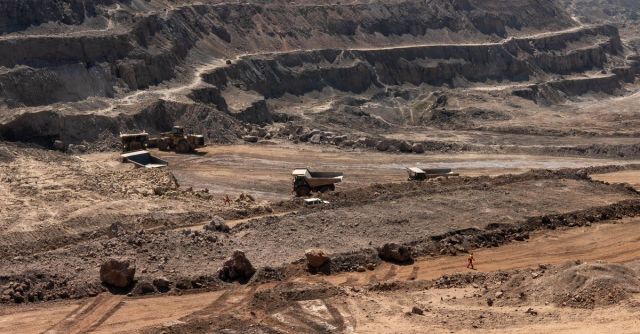
The United Nations launched a new panel to craft mining guidelines for critical minerals in high demand for electric vehicles and renewable energy technologies.
The newly established Panel on Critical Energy Transition Minerals includes representatives from close to 100 countries as well as nonprofit organizations and industry groups. It’s tasked with developing “a set of global common and voluntary principles to safeguard environmental and social standards and embed justice [in] the energy transition.”
Powering an economy with renewable energy is a mineral-intensive endeavor. And it’ll take a concerted effort to curb human rights violations and environmental harms tied to the extraction of those minerals. This is just a first step toward tackling a problem that could grow much bigger without guardrails in place.
Powering an economy with renewable energy is a mineral-intensive endeavor
Demand for minerals used in renewable energy technologies is expected to rise almost fourfold by 2030. That includes lithium, cobalt, and copper used in batteries for EVs and wind and solar systems. Building an EV requires about six times as many mineral resources as manufacturing a gas-guzzling car and an onshore wind plant needs as much as nine times more minerals than a gas-fired plant, according to the International Energy Agency.
Already, supply chains for these minerals are riddled with allegations of human rights violations and labor and environmental abuses. One Tesla battery materials supplier has racked up at least 70 allegations of abuses since 2010, The Verge reported last year. That included poor working conditions at a cobalt mine in the Democratic Republic of the Congo, where workers told The Verge they had to work long hours in oppressive heat with little water, food, or pay.
There are limitations to what the United Nations can do to turn things around. While advocates representing environmental groups and Indigenous peoples affected by mining have some seats at the table, the guidelines will also be shaped by industry representatives on the panel. The International Council on Mining and Metals, which represent a third of the global metals and mining industry, is a member of the panel.
And at the end of the day, the panel is only putting out nonbinding recommendations for best practices. “The fact that these will only be voluntary principles means there’ll be no enforcement mechanism for whatever guidelines are developed. In the end, voluntary guidelines are only as good as those willing to commit to them,” Laura Kelly, director of sustainable markets research at the think tank International Institute for Environment and Development, told The Guardian.
The UN panel is expected to share draft voluntary guidelines by the United Nations General Assembly in September.
“A world powered by renewables is a world hungry for critical minerals,” UN Secretary-General António Guterres said during the launch of the new panel on Friday. “The renewables revolution is happening – but we must guide it towards justice.”
The United Nations launched a new panel to craft mining guidelines for critical minerals in high demand for electric vehicles and renewable energy technologies. The newly established Panel on Critical Energy Transition Minerals includes representatives from close to 100 countries as well as nonprofit organizations and industry groups. It’s tasked…
