A compact biodegradable battery with fungal paper electrodes is what researchers at this university are dreaming of

- Mycelium might power electronics someday, if it stops biodegrading before the job is done
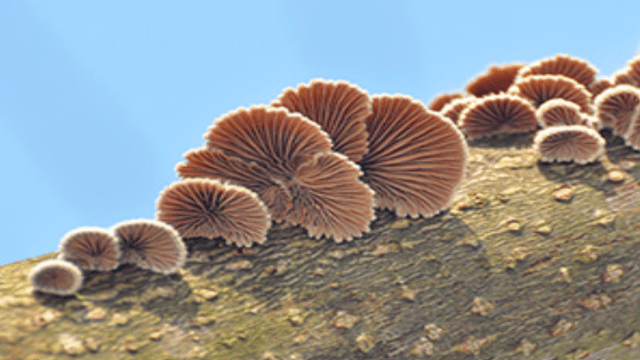
- The split-gill mushroom’s extracellular matrix may be the key to future green batteries
- Scientists dream of compostable batteries, but controlling fungal behavior remains a major challenge
Researchers from Empa, the Swiss Federal Laboratories for Materials Science and Technology, are exploring the potential of fungal mycelium to create a compact, biodegradable battery.
Their goal is to use mycelium to produce “fungal paper” for battery electrodes – a concept that, according to researcher Ashutosh Sinha, remains in the experimental phase.
“We want to produce a compact, biodegradable battery whose electrodes consist of a living ‘fungal paper,’” Sinha states, emphasizing that this vision is still a dream for now.
The dream of biodegradable batteries
The idea of a biodegradable battery made from living materials is ambitious. The team is working with the mycelium of the split-gill mushroom, a fungus known for its unique mechanical and biological properties.
This fungus is naturally biodegradable and, when combined with its extracellular matrix, produces a material with promising potential for sustainable applications in technology.
The aim is to develop a system that decomposes without releasing harmful waste – unlike conventional electronic devices – by using the natural properties of the material.
Empa researchers are now examining how the tensile strength of mycelium and its sensitivity to moisture can be applied in components like biodegradable sensors and batteries.
Working with living materials brings notable challenges. Mycelium’s biodegradable nature is both an advantage and a limitation.
On one hand, it could significantly reduce the environmental impact of batteries. On the other, its tendency to degrade raises concerns about its longevity and reliability in electronic devices.
Living materials also respond to their environments, making it difficult to predict or control their behavior consistently.
“Biodegradable materials always react to their environment. We want to find applications where this interaction is not a hindrance but maybe even an advantage,” said Empa’s Gustav Nyström.
The idea of a compact, biodegradable battery with fungal paper electrodes remains conceptual, and one of the biggest challenges will be refining the material to meet performance standards required in modern electronics.
Nevertheless, it represents a promising step toward more sustainable and environmentally conscious electronics.
You might also like
Mycelium might power electronics someday, if it stops biodegrading before the job is done The split-gill mushroom’s extracellular matrix may be the key to future green batteries Scientists dream of compostable batteries, but controlling fungal behavior remains a major challenge Researchers from Empa, the Swiss Federal Laboratories for Materials Science…
