Yoga Pro 7 is a reliable and efficient device for even the most demanding creative workflows with a premium 2.8k OLED screen, excellent keyboard, and a Ryzen AI 9 365 processor

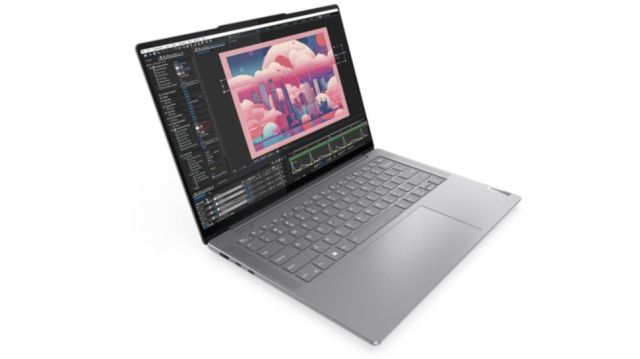
Lenovo has unveiled the latest addition in its Yoga lineup, the Lenovo Yoga Pro 7 (14”, 9th Gen) with an AI-driven AMD Ryzen AI 9 365 processor.
The new device supports the Lenovo Creator Zone, a new AI-powered software suite that allows users to generate and edit images through various methods including Text-to-Image, where users input descriptions to create images, Sketch-to-Image, which combines sketches with text for visual representation, and Image-to-Image which enable variations of existing images based on reference images and descriptions.
It also supports advanced AI features such as Lenovo X Power Software Accelerate for faster previews and exports and X Power Hardware Boost for sustained performance.
A slim yet weighty device
The Yoga Pro 7 is powered by a 73Whr battery, which Lenovo claims is enough power to get through a full day of work or school on a single charge, but despite its powerful hardware, the Yoga Pro 7 maintains a slim profile. The Yoga Pro 7 measures 25.5 x 226.49 x 15.6mm and weighs 1.54 kg. While it is not entirely a lightweight device, it is only 15.6mm at its thinnest point.
The Lenovo Yoga Pro 7 is equipped with the AMD Ryzen AI 9 365 processor with 10 cores and 20 threads, designed to deliver high-performance and efficient AI processing. This processor can achieve up to 50 TOPS (Tera Operations Per Second) through its dedicated AI engine.
One of the standout features of the Yoga Pro 7 is its 14.5-inch 2.8K PureSight Pro OLED Display. It comes with a resolution of 2880 x 1800 pixels, supports a 120Hz refresh rate and a 16:10 aspect ratio. Lenovo’s PureSight Pro technology ensures color accuracy with Delta E<1, meaning that the colors displayed are as close to real life as possible. This is complemented by 100% Adobe RGB, 100% sRGB, and 100% P3 color gamut coverage.
This device also supports the Yoga Premium Suite which features a Soft Touch-coated keyboard with 1.5mm key travel, 0.3mm deep dish keys, a dual speaker system, four microphones with voice ID noise cancellation, and an FHD IR camera for clear video calls.
In addition to the AMD Ryzen chip, this device is equipped with 32GB of LPDDR5X RAM, clocked at 6400 MHz, and a 1TB PCIe Gen 4 M.2 SSD. The PCIe Gen 4 interface ensures faster data transfer speeds, making it easy to move large files or run heavy applications.
The graphic performance of the Yoga Pro 7 uses an AMD RDNA 3 880M integrated graphics which is a decent chip for video editing, 3D modeling, or game development.
For connectivity, this device features Wi-Fi 6E and Bluetooth 5.3, ensuring fast and reliable wireless connections. It also comes with a variety of ports for connecting external devices. On the left side, there are two USB Type-C full-function ports (one supporting USB 4.0 Gen 1, PD 3.0, and DP 1.4), as well as an HDMI 2.1 port that supports up to 4K at 60Hz. On the right side, there’s a USB-A 3.2 Gen 1 (Always-On) port, along with an audio combo jack for headphones or speakers.
The Lenovo Yoga Pro 7 (14”, 9) is expected to be available in EMEA starting September 2024 with a price of €1,699.
More from TechRadar Pro
Lenovo has unveiled the latest addition in its Yoga lineup, the Lenovo Yoga Pro 7 (14”, 9th Gen) with an AI-driven AMD Ryzen AI 9 365 processor. The new device supports the Lenovo Creator Zone, a new AI-powered software suite that allows users to generate and edit images through various…
