What a deal! You can now rent human brain cells on a silicon chip for 7 days for less than a Nintendo Switch 2

- Cortical Labs offers cloud access to neuron-powered computing for just $300 a week
- CL1 fuses human brain cells and silicon and can run real code
- System enables real-time neural processing for research in AI and neuroscience
Cortical Labs, an Australian startup we’ve covered previously, has launched what it describes as the world’s first commercially available biological computer capable of running code.
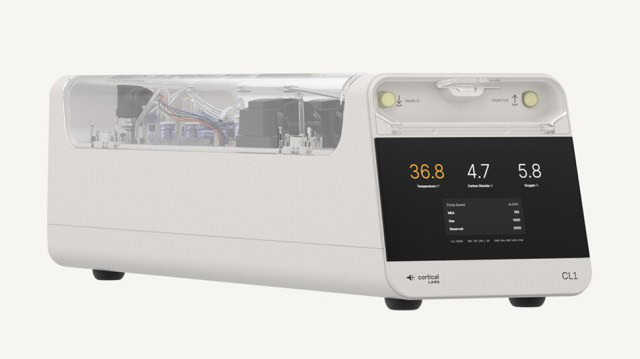
The CL1 device combines lab-grown human neurons with silicon hardware and is designed for neuroscience, biotech, and artificial intelligence research.
Customers can purchase a CL1 unit outright for $35,000 or access it remotely through a weekly rental priced at $300, with the platform already available via Cortical Labs’ wetware-as-a-service.
A new way to study brain function
Each CL1 contains about 800,000 neurons grown from reprogrammed adult cells. These neurons are kept alive by an integrated life-support system that delivers nutrients and controls the environment.
The neurons communicate and adapt using sub-millisecond electrical signals, which the company says allows the CL1 to process inputs and generate outputs almost instantly, offering a new way to study brain function.
“The CL1 does this in real time using simple code abstracted through multiple interacting layers of firmware and hardware,” Brett Kagan, Chief Scientific Officer at Cortical Labs told IEEE Spectrum. “Sub-millisecond loops read information, act on it, and write new information into the cell culture.”
The CL1 builds on DishBrain, a proof-of-concept where neurons learned to play Pong in a simulated environment.
The new model increases input channels, improves signal latency, and includes hardware enhancements that make it more suitable for research and potential commercial applications. It has already been used to restore learning function in neural cultures modeling epilepsy.
The device consumes less power than conventional AI hardware and supports use cases including drug development, AI testing, and disease modeling. It requires buyers to obtain ethical approval for new cell lines and to operate within a lab environment.
Karl Friston, a theoretical neuroscientist, called the CL1 a “remarkable achievement” and noted that it provides researchers with a practical platform to test theories about learning, behavior, and brain function using real neurons.
You might also like
Cortical Labs offers cloud access to neuron-powered computing for just $300 a week CL1 fuses human brain cells and silicon and can run real code System enables real-time neural processing for research in AI and neuroscience Cortical Labs, an Australian startup we’ve covered previously, has launched what it describes as…
