Google has a new AI model and website for forecasting tropical storms

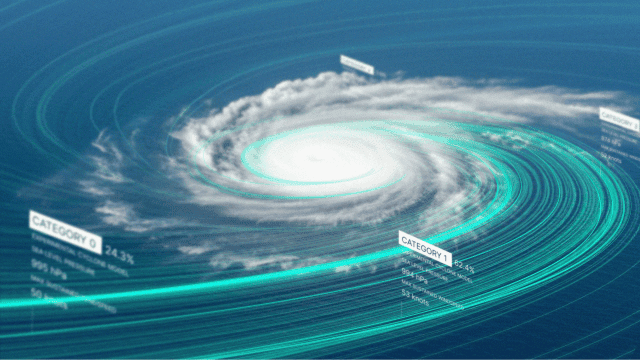
Google is using a new AI model to forecast tropical cyclones and working with the US National Hurricane Center (NHC) to test it out.
Google DeepMind and Google Research launched a new website today called Weather Lab to share AI weather models that Google is developing. It says its new, experimental AI-based model for forecasting cyclones — also called typhoons or hurricanes when they reach a certain strength — can generate 50 different scenarios for a storm’s possible track, size, and intensity up to 15 days in advance. The NHC is working with Google to evaluate the effectiveness of the model.
Advances so far don’t eliminate the need for traditional weather models
Google released a research paper today, which has yet to be peer-reviewed, on how its tropical cyclone model works. It claims that its model’s predictions are at least as accurate as those of traditional physics-based models. We’ll have to see what the National Hurricane Center’s rating of it is as the Atlantic hurricane season churns through November.
For now, the aim is to strengthen NHC’s forecasting in order to give people more accurate warnings and time to prepare for a storm. According to Google, its model’s five-day predictions for cyclone tracks in the North Atlantic and East Pacific were 87 miles (140 km) closer, on average, to the storm’s actual track than predictions from the European Center for Medium-Range Weather Forecasts (ECMWF) in 2023 and 2024.
Weather Lab’s interactive website lets people see how AI models compare to the ECMWF’s physics-based models. But Google is emphasizing that its website is just a research tool for now — not something the public should rely on for forecasts.
Animation showing the Google model’s prediction for Cyclone Alfred when it was a Category 3 cyclone in the Coral Sea. The model’s ensemble mean prediction (bold blue line) correctly anticipated Cyclone Alfred’s rapid weakening to tropical storm status and eventual landfall near Brisbane, Australia, seven days later, with a high probability of landfall somewhere along the Queensland coast. Credit: Google
The company says it’s also working with the Cooperative Institute for Research in the Atmosphere at Colorado State University and other researchers in the UK and Japan to improve its AI weather models.
“For a long time, weather has been viewed as a public good, and I think, you know, most of us agree with that … Hopefully we can contribute to that, and that’s why we’re trying to kind of partner with the public sector,” Peter Battaglia, a research scientist at Google DeepMind, said in a press call when The Verge asked about concerns surrounding privatizing weather services.
Tellingly, Google’s announcement today doesn’t mention the climate crisis like the company has in previous launches for this kind of program. “As climate change drives more extreme weather events, accurate and trustworthy forecasts are more essential than ever,” it said in a December 4 announcement for GenCast.
Google is using a new AI model to forecast tropical cyclones and working with the US National Hurricane Center (NHC) to test it out. Google DeepMind and Google Research launched a new website today called Weather Lab to share AI weather models that Google is developing. It says its new,…
