I can’t decide if I love or hate Halliday Smart Glasses with its ultra-tiny display and nosey AI

- Halliday smart glasses include a tiny screen and AI.
- They’re supposedly proactive.
- The display is incredibly small – but might not appear that way to your eye.
One of the hottest trends at CES 2025 is wearables, and if we zoom in a bit, we’ll see that the biggest part of that trend is all the new smart glasses. Joining that collection but with a decided twist is Halliday, new “proactive AI eyewear” that seeks to augment your reality with at-a-glance information.
CES 2025
TechRadar will be extensively covering this year’s CES, and will bring you all of the big announcements as they happen. Head over to our CES 2025 news page for the latest stories and our hands-on verdicts on everything from 8K TVs and foldable displays to new phones, laptops, smart home gadgets, and the latest in AI.
And don’t forget to follow us on TikTok and WhatsApp for the latest from the CES show floor!
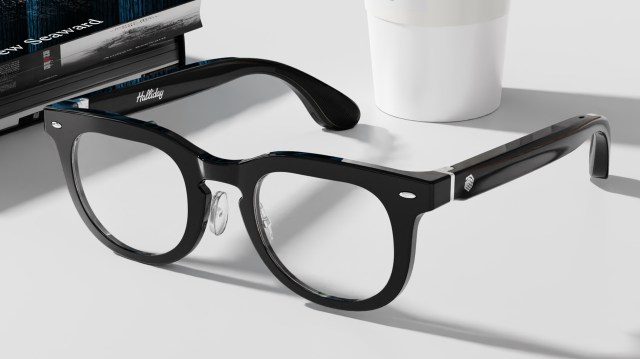
Halliday – named for a key character in Ready, Player One – are 35-gram smart wearable eyeglasses that have the benefit of looking almost exactly like traditional eyewear. However, hidden inside the classic-looking glasses is a fair amount of technology, including an unusual Digi Window microdisplay.
Integrated displays are nothing new in the realm of augmented reality eyewear, but Halliday’s approach is a bit unusual. Where Snap Spectacles and Meta Orion smart glasses employ waveguide technology to paint large portions of the eyeglass lenses with semi-translucent imagery, Halliday uses one of the tiniest displays I have ever seen and does absolutely nothing to the wearable’s lenses.

Developed by Gygeslabs, the Digi Window looks like a tiny, pea-sized display positioned along the upper right side of the frame. In images shared with TechRadar, it appears to be adjustable, letting the wearer move it slightly to better position the DigiWindow for each wearer.
It is a tiny screen that looks like a 3.5-inch monochrome display up close to your eye. Yes, that’s about the same size as the original iPhone. The utility of a tiny screen that must glance up to see is unclear.
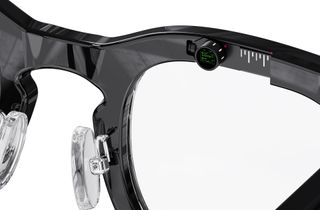
The real benefit here, though, may come from combining the Digi Window with AI-powered information that comes not from Halliday Smart Glasses but from the Halliday AI app running on your Android or iPhone.
Not only can you query the Halliday AI agent, but it can, with your permission, proactively listen to conversations through a microphone located in the glasses, even jumping in with answers to “complex questions” during a meeting.
There are speakers for listening to music, conducting calls, and, if you choose, chatting with the Halliday AI. Of course, that’s not necessary if you just want to read the information on the green-on-black text readout in that tiny Digi Window display.
Other Halliday smart Glasses features include:
- Meeting summarization
- Notifications
- Teleprompter mode (no more hand-written notes!)
- Voice translation
- Turn-by-turn navigation
- Note-taking
In addition to voice control, the frames and app work with a custom control ring that responds to taps and swipes but not gestures alone.
According to Halliday, the frame, which comes in a somewhat iconic black or tortoise, lasts eight hours on a charge. They’ll accommodate prescription and clear lenses and should start shipping sometime in the first quarter of this year.
Pricing is set at $489.99 in the United States and will be priced similarly in other global markets.

While I applaud Halliday’s unconventional approach, a virtual 3.5-inch screen might be a tough sell in a world where full field-of-view augmented reality is expected from Meta, Snap, and others in the next 24 months.
Putting the tiny display on the frame and out of direct view lowers the possibility of an obstructed view and anyone noticing the imagery, but it also means you’ll have to at least glance up to see the information. It reminds me of Google Glass, which placed a prismatic lens just above eye level. Every photo of me using Google Glass depicts me looking up.
Of course, I’ll reserve judgment until I get a chance to try out the Halliday Smart Glasses for myself.
@techradar
♬ original sound – TechRadar
You might also like
Halliday smart glasses include a tiny screen and AI. They’re supposedly proactive. The display is incredibly small – but might not appear that way to your eye. One of the hottest trends at CES 2025 is wearables, and if we zoom in a bit, we’ll see that the biggest part…
