Kill two birds with one stone — recycled polystyrene material that looks like bird feather could be used to generate electricity from waste energy in air
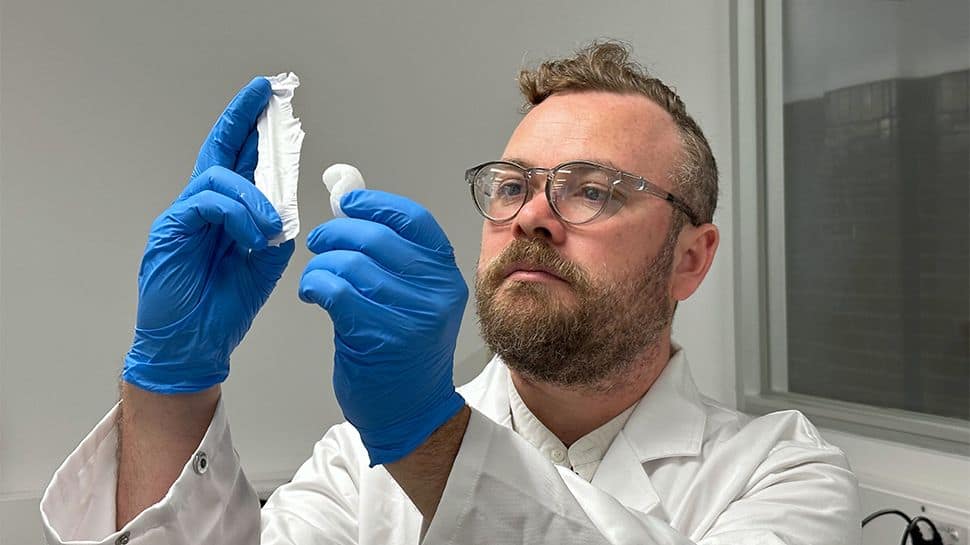
Over 27 million tons of single-use polystyrene packaging are produced worldwide each year, yet only 12% is recycled – most ends up in landfills after its initial use.
Researchers at RMIT University and Riga Technical University have developed an innovative way to generate electricity using waste polystyrene, addressing both energy needs and the environmental impact of the ubiquitous packaging material.
The invention repurposes discarded polystyrene into a device that generates static electricity from motion, such as wind or airflow. The device is a thin patch, made from multiple layers of polystyrene, each around “one-tenth the thickness of a human hair,” according to lead researcher Dr. Peter Sherrell, who went on to explain, “We can produce this static electricity just from air blowing on the surface of our clever patches, then harvest that energy.”
Producing electricity consistently
The patch, which can capture turbulent airflow from air conditioning units, could reduce energy demand by up to 5% and lower the carbon footprint of these systems. Tests show the device can reach up to 230 volts, comparable to household voltage but at a lower power level.
Sherrell noted, “The biggest numbers come from a compression and separation, where you’ve got faster speeds and bigger motion, while smaller motion generates less energy. This means that in addition to air conditioners, integrating our patches in high traffic areas such as underground walkways could supplement local energy supply without creating additional demand on the grid.”
The device’s longevity stems from the same properties that make polystyrene slow to decompose. “The great thing here is the same reason that it takes 500 years for polystyrene to break down in landfill makes these devices really stable – and able to keep making electricity for a long time,” Sherrell said.
This process involves learning how to modify plastics to optimize their energy-generating potential: “We’ve studied which plastic generates more energy and how when you structure it differently – make it rough, make it smooth, make it really thin, make it really fat – how that changes all this charging phenomenon.”
This static electricity generation project is part of the team’s ongoing research into triboelectric nanogenerators, as published in Advanced Energy and Sustainability Research. RMIT has filed a provisional patent for its device and is now looking for industry partners to help develop the technology for commercial applications.
More from TechRadar Pro
Over 27 million tons of single-use polystyrene packaging are produced worldwide each year, yet only 12% is recycled – most ends up in landfills after its initial use. Researchers at RMIT University and Riga Technical University have developed an innovative way to generate electricity using waste polystyrene, addressing both energy…
