PlayStation’s new PSSR AI upscaling looks set to compete with Nvidia’s DLSS – while AMD falls behind yet again

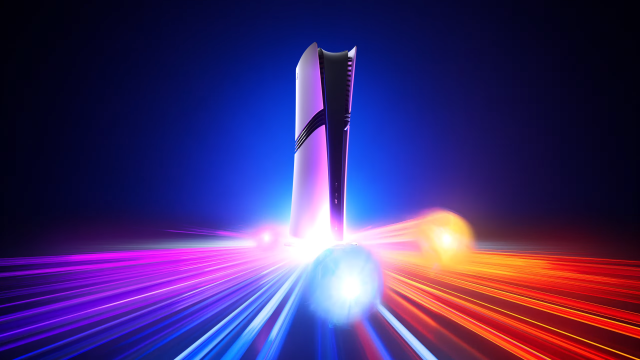
The brand new PSSR AI upscaling method built for the PS5 Pro appears to defeat AMD’s FSR 3.1, taking a leap closer to Nvidia’s DLSS – perhaps giving gamers another reason to purchase Sony’s enhanced console.
After its reveal during a presentation by PlayStation Lead Designer Mark Cerny, reception towards the PS5 Pro was somewhat negative – largely due to its pricing, which positioned it as comparable to a pre-built gaming PC. The main differences between the upcoming console and its base model are PSSR, 28% faster RAM, and a claim of 67% more compute units for better performance (while using ray-tracing), but all while still using the same internal CPU.
Scrutiny aside, the PSSR AI upscaling method may easily become the main talking point – a hands-on experience from Digital Foundry proves that PSSR at ‘Performance Mode’ is much clearer and detailed in comparison to FSR 3.1 in ‘Performance Mode’ while playing Insomniac Games’ Ratchet & Clank: Rift Apart.

What does this mean for AMD?
While the PS5 Pro’s PSSR may be convincing and a drastic step in the right direction for Sony – especially if many games run at a smooth 60 frames per second – it still won’t justify the $699.99 price tag (£699 / AU$1,199.95) for many users. Other than the recent reveal of Sucker Punch’s Ghost of Yotei, Bungie’s Marathon, Insomniac’sWolverine, and other timed exclusives, there aren’t many other exclusive first-party titles coming to the platform in 2025 that we know of at present, a key pull factor that could help sell the Pro.
A plethora of PlayStation exclusives are making their way to PC, some of which will launch simultaneously on the PS5 – such as the aforementioned Marathon – and it further supports the idea of opting for a pre-built system over Sony’s updated console. While GTA 6 won’t be coming to PC until some time after launch, there is currently no guarantee that the PS5 Pro will provide 60 frames per second, which will certainly leave many disappointed.
As for AMD, it’s a defeat yet again as Team Red appears to be overtaken in three regions – their next-gen graphics cards will steer away from high-end, along with Nvidia continuing to dominate in the gaming laptop market, while also losing to both PlayStation’s PSSR and Nvidia’s DLSS.
We will have to wait and see just how impactful AMD’s newfound focus on AI for FSR 4 will be – it’s claimed that battery life and performance for gaming handhelds will see big improvements using the Ryzen Z2 Extreme APU, which is hopefully a sign of bigger things to come in 2025.
You might also like…
• Are you as horrified by the PS5 Pro pricing as I am? Just buy a gaming laptop instead, seriously
• New PS5 games 2024: most anticipated PS5 release dates
• PS5 Pro pre-order guide: the latest and best places to find stock
The brand new PSSR AI upscaling method built for the PS5 Pro appears to defeat AMD’s FSR 3.1, taking a leap closer to Nvidia’s DLSS – perhaps giving gamers another reason to purchase Sony’s enhanced console. After its reveal during a presentation by PlayStation Lead Designer Mark Cerny, reception towards…
