Solar panel manufacturing shines in the US — but installations are falling

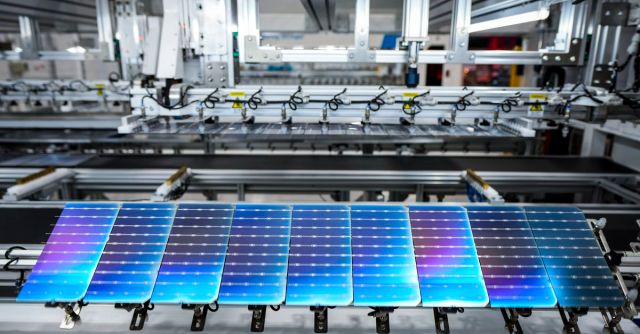
The US has quadrupled its capacity for manufacturing solar panels in just a couple of years since passing the biggest federal spending package yet on climate and clean energy.
Domestic solar module manufacturing capacity grew to 31.3 gigawatts in the second quarter of 2024, according to a report published this week by Wood Mackenzie and the Solar Energy Industries Association. That’s a significant jump, comparable to around 80 percent of the roughly 40GW of solar the US installed last year.
It’s some welcome news as the US tries to meet goals it has set under the Paris agreement meant to keep climate disasters like wildfires and flooding from growing significantly worse. The Biden administration has made domestic manufacturing a priority in the country’s clean energy transition.
“The incentives in the IRA really catalyzed this growth.”
“The incentives in the IRA really catalyzed this growth [in manufacturing capacity],” Michelle Davis, lead author of the report and head of global solar at Wood Mackenzie Power & Renewables, said in an email to The Verge.
Nevertheless, there are some lingering clouds darkening solar energy’s forecast in the US. The US might be making more solar panels, but the rate at which people are installing them has slowed recently. After years of growth, Wood Mackenzie expects residential solar installations to fall 19 percent this year.
That’s largely driven by California’s decision to lower rates utilities pay to residents who sell them excess power from new home solar systems, according to the report. High financing rates and the bankruptcies of two major residential solar companies this summer have likely also taken their toll.
Utility-scale solar installations are also expected to decline two percent this year, although this sector is faring better than residential solar. Projects have struggled with securing enough labor and high-voltage equipment, the report says. Long wait times for connecting to the grid are another issue. Overall installations, including residential solar panels, are projected to drop by 4 percent this year.
This all makes financial incentives like those in the IRA crucial as the US tries to build up a domestic supply chain. By next year, installations are expected to start climbing again, growing 4 percent on average through 2029. Despite the challenges the industry faces, it still made up 67 percent of new generating capacity added to the power grid in the first half of this year.
The US has quadrupled its capacity for manufacturing solar panels in just a couple of years since passing the biggest federal spending package yet on climate and clean energy. Domestic solar module manufacturing capacity grew to 31.3 gigawatts in the second quarter of 2024, according to a report published this…
