Apple has a smart new idea for iPhone cases – built-in capacitive buttons and Touch ID

For many iPhone users (myself included), a protective case is an absolute necessity. We’re just too clumsy to subject our phones to the whims of nature, and without a case our devices would be smashed up and wrecked long ago. Yet having a case enveloping your iPhone can at times be a hassle, with ill-fitting button cutouts and limited features compared to a ‘naked’ phone.
Well, it looks like Apple is working on fixing that problem, at least if a new patent application is to be believed. The freshly-published patent describes a special iPhone case that could allow for a range of extra features, such as Touch ID and a sliding gesture with a mysterious, as-yet-unknown use.
Right now, iPhone cases are mostly pretty simple, but Apple says they can have their own problems. If a case doesn’t fit too well, for example, you might get a small air gap between the case’s side buttons and the corresponding buttons on your phone, which reduces the tactility you get when pressing those buttons.
Apple’s patent suggests that a phone or a case could take measures to reduce the air gap, but that brings up its own issues: particularly sensitive buttons might get accidentally triggered if there is no space between the case and the phone, which could have all sorts of annoying consequences.
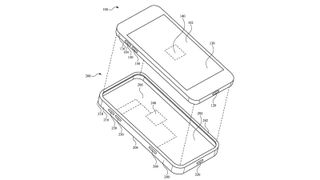
So how do you fix this problem? Well, the patent contains some interesting nuggets on this subject. One possible solution is to build capacitive buttons into the case itself. This would allow for some new interactions – for instance, a smooth capacitive panel would let you slide your finger up and down on it, potentially using it to adjust your phone’s volume or screen brightness.
Preparing for the iPhone 16?
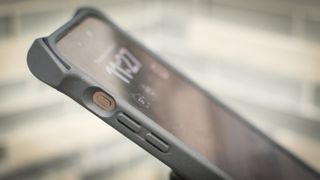
This could also have a bearing on the iPhone 16, which is set to launch at Apple’s September 9 iPhone event. The iPhone 16 range is rumored to launch with capacitive buttons that don’t actually move when you press them.
They essentially work by detecting the presence of your finger, then tapping it lightly using a haptic engine. The problem? The iPhone might not be able to detect your finger if the device is obscured by a case. Yet if Apple can build a case with built-in capacitive sensors, you wouldn’t have to sacrifice protection in order to simply use your iPhone’s buttons.
Elsewhere, the patent suggests that capacitive case buttons could contain fingerprint readers, thus making them compatible with Apple’s Touch ID tech for logging in and verifying purchases. While Apple is phasing out Touch ID in favor of Face ID on its phones, some iPads still use Touch ID, which is where this case tech might end up being deployed.
That said, we don’t know if these ideas will ever come to fruition. They’re just patents, after all, and Apple often explores ideas that never actually go anywhere. Still, the patent shows that Apple is at least considering this concept, so keep your eyes peeled to see if it becomes a reality any time soon.
You might also like…

For many iPhone users (myself included), a protective case is an absolute necessity. We’re just too clumsy to subject our phones to the whims of nature, and without a case our devices would be smashed up and wrecked long ago. Yet having a case enveloping your iPhone can at times…
