This AI ghost of the past might be your guide through museums of the future

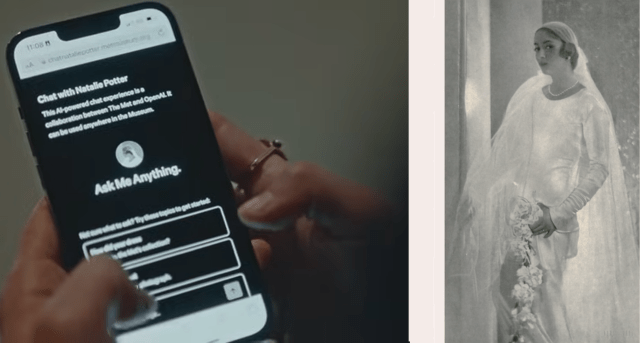
The Metropolitan Museum of Art’s latest fashion showcase includes not just a 1930s wedding dress but a virtual ghost of the kind of socialite who would have worn it. OpenAI teamed up with the museum to create Natalie Potter, a fictional, century-old woman powered by its latest AI model, to interact with museum-goers and tell them about the dress and its place in fashion history.
The dress is part of the “Sleeping Beauties: Reawakening Fashion” exhibit. Using a smartphone, you can access Chat with Natalie and message with “here” by text the way you would with ChatGPT.
You can learn about her dress and details about her life, wedding, and the world of 1931 when the dress was made. You can ask questions and receive detailed answers that go beyond the typical displays of traditional exhibits. The idea is for it to feel like conversing with someone who was there and lived in that world.
The Costume Institute’s curator, Andrew Bolton, came to OpenAI about using AI for the exhibit and worked with the company to design Natalie. The collaborators trained OpenAI’s model with a database of relevant information, including newspapers, letters, and other documents of the time. OpenAI fed that data into its AI model to produce Natalie. The AI chatbot doesn’t just regurgitate facts but also mimics the language, beliefs, and approach to conversation common to the time.
Chat with Natalie is strictly text, but an extra feature employs OpenAI’s Sora AI video maker. If you ask Natalie about the accompanying photo depicting a woman in the dress, you’ll get an option to ‘reanimate’ it and see an AI-generated video of the woman in the dress moving around.

AI Time Travel
“I thought there was incredibly inspiring because [Bolton’s] vision was to bring this exhibition to life through AI and making people participants, not just passive observers,” OpenAI CTO Mira Murati explained. “The whole experience of going to a museum becomes more active and more custom to the thing that you are interested in.”
Though Natalie’s chatbot is limited to one AI character, it’s very easy to imagine how OpenAI and other AI developers could work with museums to bring historical figures to life through AI, not just with recited lines but as interactive characters that can help educate visitors. When so much information is online, this approach isn’t a gimmick; it could be crucial to engaging the public with history, art, and culture as a whole.
Of course, it won’t happen overnight. Dealing with hallucinations is especially important so that the information and portrayal of people are accurate and stick to the AI’s persona. Still, the collaboration between OpenAI and The Met sets a promising precedent for future projects.
You might also like…
The Metropolitan Museum of Art’s latest fashion showcase includes not just a 1930s wedding dress but a virtual ghost of the kind of socialite who would have worn it. OpenAI teamed up with the museum to create Natalie Potter, a fictional, century-old woman powered by its latest AI model, to…
