Rivian explains why its EVs will never embrace Apple CarPlay, but conveniently omits the real reason

After months of debate, Rivian CEO RJ Scaringe recently told The Verge’s Decoder podcast that the door for Apple CarPlay integration in the company’s vehicles has been well and truly closed.
Like Tesla, Rivian wants to forge its own path when it comes to the in-vehicle user experience, leaning on its in-house software engineers to “fully capture every feature that’s in CarPlay,” according to the man himself.
“We just believe that it’s such an important piece of real estate, the digital ecosystem, that it was something we want to retain,” Scaringe went on to tell Decoder host Nilay Patel.
But overarching public opinion seems to go against this notion. During WWDC 2022, Apple’s former engineering manager Emily Schubert said that 79 per cent of US buyers would only buy a car if it supported CarPlay.
Sure, that might just be Apple blowing an Apple-shaped trumpet, but internal research by Porsche also revealed an “overwhelming” number of its customers use iPhones and demanded more functionality within the Apple ecosystem when driving their cars.
As a result, Porsche is among the first to allow Apple to integrate deeper into the UI of its upcoming vehicles.

So why is Rivian running away from it? RJ Scaringe claims CarPlay doesn’t have deep enough capabilities to leverage other parts of the vehicle experience. In other words, drivers would have to exit the CarPlay ecosystem to, for example, open the ‘frunk’.
But this begs the question: why not just have a physical button inside the cabin that does this? Car designers will claim it “declutters” an interior and leads to a more visually appealing space, while those in charge of manufacturing will attest to the fact it saves complication and therefore money.
However, this drive for ever-more software within vehicles (particularly from those Californian tech start-ups) often feels like a personal quest, rather than a consumer-facing decision.
A study by WhatCar? in the UK found that nine out of 10 motorists preferred a car with physical buttons, rather than everything committed to touchscreen.
This is a painful point that Volkswagen was forced to take on board when it received serious backlash from customers and reviewers, as they rallied against its early ID range of electric vehicles and their distinct – and often frustrating – lack of physical buttons.
Even Euro NCAP, which is the leading expert in crash safety for European car manufacturers, says that it will start punishing OEMs for committing too much vehicle functionality to screen, citing the fact that it is distracting and dangerous.
Cars aren’t phones
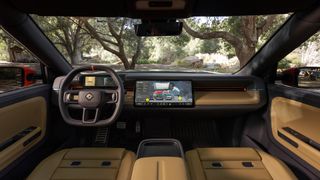
Until true SAE Level 5 driverless cars become a reality, the automobile as we know it isn’t a smartphone on wheels – no matter how much modern manufacturers try and tell you it is.
As the law (and common sense) sees it, we still need to be in control and not texting, firing off Instagram posts or bingeing a boxset. However, data is the next big revenue stream for car companies, which is why so many of them are hellbent on keeping drivers within their own software ecosystems.
Why should Apple and Google get an insight into your every move, when Rivian and Tesla can leverage that information for financial gain?
It is true that manufacturers, particularly those of today’s EVs, can offer more detailed functionality when drivers embrace their software, with the likes of Tesla able to reveal how busy its Supercharger sites are when drivers choose to use the company’s mapping, for example.
But for so many drivers, the smartphones in their pockets already host the best mapping, podcast, entertainment and communication tools for daily use, so most simply want to mirror that experience. Ferrari isn’t even bothering to develop its in-house navigation any more.
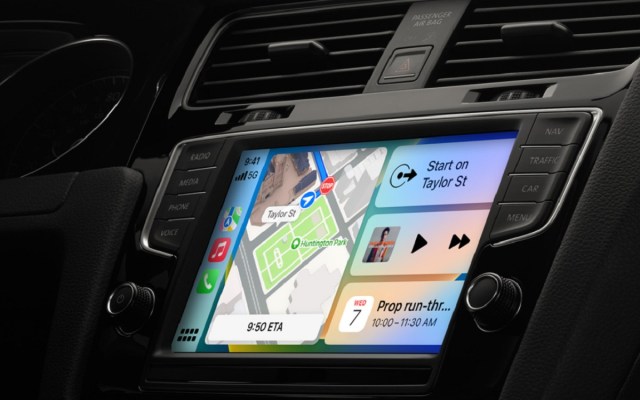
Apple CarPlay, to cite just one example, is already offering much deeper vehicle functionality into its ecosystem, so should theoretically negate the need for users to jump in and out of two different interfaces to control important vehicle features.
That said, what’s wrong with just having a physical button or dial to control the lights and adjust the air-con… or in Rivian’s case, open the frunk?
You might also like
After months of debate, Rivian CEO RJ Scaringe recently told The Verge’s Decoder podcast that the door for Apple CarPlay integration in the company’s vehicles has been well and truly closed. Like Tesla, Rivian wants to forge its own path when it comes to the in-vehicle user experience, leaning on…
