‘Pushing the boundaries of digital expression’: 32-inch game-changing holographic XR display is launched — however it won’t be for everyone given its rather expensive price tag

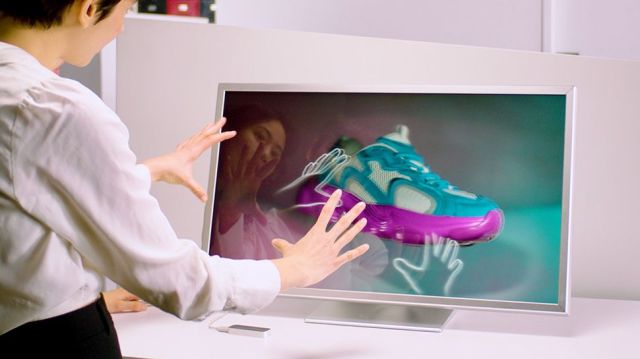
Hologram firm Looking Glass has expanded its range of products with the debut of new 16 and 32-inch spatial displays, enabling group 3D visuals without the need for clunky headsets like Apple Vision Pro.
The screens take the concept of extended reality or XR immersion a step further than before, targeting professionals in need of high-tech visualization tools for the development and display of interactive 3D digital content.
The company recently announced Looking Glass Go, a smartphone-sized display that uses the power of an AI algorithm to turn static photos into spatial 3D ones, and generate interactive holograms for ChatGPT. Looking Glass says while Go is designed to turn your 2D photos into 3D memories, the larger screens cater to XR developers and professionals in design, engineering, education, research, and healthcare.
Pushing the boundaries of digital expression
“We’ve seen so many industries and individuals benefit from our group-viewable spatial displays,” said Shawn Frayne, Co-founder & CEO of Looking Glass. “Creatives pushing the boundaries of digital expression. Design studios creating the next generation of products. Museums bringing artifacts back to life. Marketers creating magical, immersive brand moments. Medical students learning hands-on with realistic anatomy. Researchers investigating cellular drug therapies. Everywhere, companies are creating a new generation of XR experiences using Looking Glass displays and the new 16 and 32-inch displays will only enhance their ability to do that.”
Features of the new larger displays include multiple viewer options, diverse media support, peripheral support for sensors enabling touchless gesture control, and a comprehensive software suite that supports plugins for Unity, Unreal, Blender, and WebXR, plus a 3D model importer and a potent software development kit for custom 3D and holographic content creation.
These displays can be used in portrait or landscape orientation and Looking Glass says their slim design means they can be mounted on the wall.
The price might be something of a deterrent for prospective purchasers, however. The starting price for the 16-inch version is $4,000, although it’s currently on offer for $3,000. Anyone interested in the 32-inch Spatial Display will need to contact Looking Glass for pricing information, so you know that’s going to be super expensive.
More from TechRadar Pro

Hologram firm Looking Glass has expanded its range of products with the debut of new 16 and 32-inch spatial displays, enabling group 3D visuals without the need for clunky headsets like Apple Vision Pro. The screens take the concept of extended reality or XR immersion a step further than before,…
