AMD teams up with Arm to unveil AI chip family that does preprocessing, inference and postprocessing on one silicon — but you will have to wait more than 12 months to get actual products

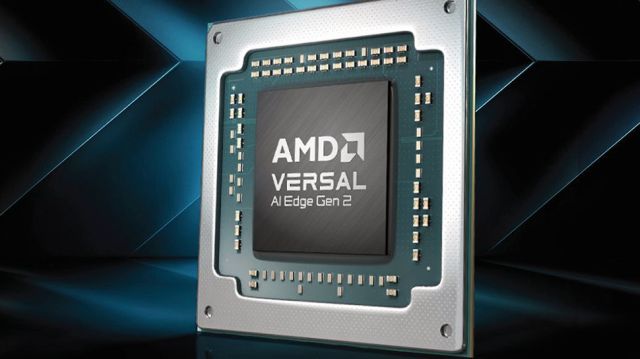
AMD is introducing two new adaptive SoCs – Versal AI Edge Series Gen 2 for AI-driven embedded systems, and Versal Prime Series Gen 2 for classic embedded systems.
Multi-chip solutions typically come with significant overheads but single hardware architecture isn’t fully optimized for all three AI phases – preprocessing, AI inference, and postprocessing.
To tackle these challenges, AMD has developed a single-chip heterogeneous processing solution that streamlines these processes and maximizes performance.
Early days yet
The Versal AI Edge Series Gen 2 adaptive SoCs provide end-to-end acceleration for AI-driven embedded systems, which the tech giant says is built on a foundation of improved safety and security. AMD has integrated a high-performance processing system, incorporating Arm CPUs and next-generation AI Engines, with top-class programmable logic, creating a device that expertly handles all three computational phases required in embedded AI applications.
AMD says the Versal AI Edge Series Gen 2 SoCs are suitable for a wide spectrum of embedded markets, including those with high-security, high-reliability, long lifecycle, and safety-critical demands. Purposes include autonomous driving, industrial PCs, autonomous robots, edge AI boxes and ultrasound, endoscopy and 3D imaging in health care.
The processing system of the integrated CPUs includes up to 8x Arm Cortex-A78AE application processors, up to 10x Arm Cortex-R52 real-time processors, and support for USB 3.2, DisplayPort 1.4, 10G Ethernet, PCIe Gen5, and more.
The devices meet ASIL D / SIL 3 operating requirements and are compliant with a range of other safety and security standards. They reportedly offer up to three times the TOPS/watt for AI inference and up to ten times the scalar compute with powerful CPUs for postprocessing.
Salil Raje, senior vice president of AMD’s Adaptive and Embedded Computing Group, said, “The demand for AI-enabled embedded applications is exploding and driving the need for solutions that bring together multiple compute engines on a single chip for the most efficient end-to-end acceleration within the power and area constraints of embedded systems. Backed by over 40 years of adaptive computing leadership in high-security, high-reliability, long-lifecycle, and safety-critical applications, these latest generation Versal devices offer high compute efficiency and performance on a single architecture that scales from the low-end to high-end.”
Early access documentation and evaluation kits for the devices are available now. The first silicon samples of Versal Series Gen 2 are expected at the start of next year, with production slated to begin late 2025.
More from TechRadar Pro
AMD is introducing two new adaptive SoCs – Versal AI Edge Series Gen 2 for AI-driven embedded systems, and Versal Prime Series Gen 2 for classic embedded systems. Multi-chip solutions typically come with significant overheads but single hardware architecture isn’t fully optimized for all three AI phases – preprocessing, AI…
