Another startup is taking on Nvidia using a clever trick — Celestial AI brings DDR5 and HBM together to slash power consumption by 90%, may already be partnering with AMD


There’s no shortage of startups pushing technology that could one day prove pivotal in AI computing and memory infrastructure.
Celestial AI, which recently secured $175 million in Series C funding, is looking to commercialize its Photonic Fabric technology which aims to redefine optical interconnects.
Celestial AI’s foundational technology is designed to disaggregate AI compute from memory to offer a “transformative leap in AI system performance that is ten years more advanced than existing technologies.”
Lower energy overhead and latency
The company has reportedly been in talks with several hyperscale customers and a major processor manufacturer, about integrating its technology. Though specific details remain under wraps, that manufacturer is quite likely to be AMD since AMD Ventures is one of Photonic Fabric’s backers.
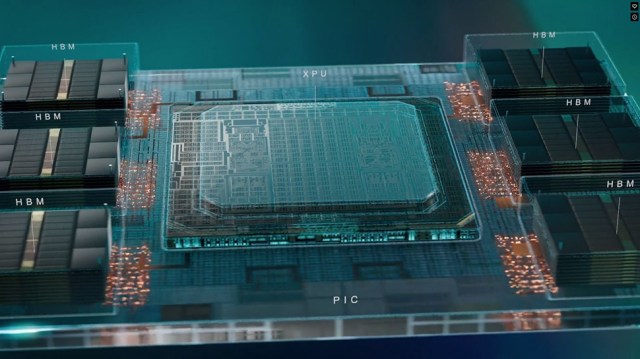
As reported by The Next Platform, the core of Celestial AI’s strategy lies in its chiplets, interposers, and optical interconnect technology. By combining DDR5 and HBM memory, the company aims to significantly reduce power consumption while maintaining high performance levels. The chiplets can be used for additional memory capacity or as interconnects between chips, offering speeds comparable to NVLink or Infinity Fabric.
“The surge in demand for our Photonic Fabric is the product of having the right technology, the right team and the right customer engagement model”, said Dave Lazovsky, Co-Founder and CEO of Celestial AI.
“We are experiencing broad customer adoption resulting from our full-stack technology offerings, providing electrical-optical-electrical links that deliver data at the bandwidth, latency, bit error rate (BER) and power required, compatible with the logical protocols of our customer’s AI accelerators and GPUs. Deep strategic collaborations with hyperscale data center customers focused on optimizing system-level Accelerated Computing architectures are a prerequisite for these solutions. We’re excited to be working with the giants of our industry to propel commercialization of the Photonic Fabric.”
While Celestial AI faces challenges in timing and competition from other startups in the silicon photonics space, the potential impact of its technology on the AI processing landscape makes it a promising contender. As the industry moves towards co-packaged optics and silicon photonic interposers, Celestial AI’s Photonic Fabric could play a key role in shaping the future of AI computing.
More from TechRadar Pro
There’s no shortage of startups pushing technology that could one day prove pivotal in AI computing and memory infrastructure. Celestial AI, which recently secured $175 million in Series C funding, is looking to commercialize its Photonic Fabric technology which aims to redefine optical interconnects. Celestial AI’s foundational technology is designed…
