Microsoft’s dimming tech for displays might do more harm than good

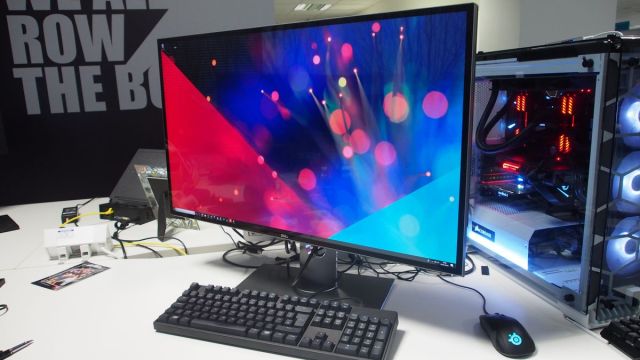
A new patent from Microsoft has popped up, revealing a concept called Pixel Luminesce for Digital Display technology. This product would, theoretically, allow users to control every pixel on a display, essentially allowing you to selectively dim your display based on preferences and needs.
Though this concept sounds like an accessibility dream for those who suffer from sight issues, light sensitivity, and other disorders, it could also be a case of technology that’s mostly too good to be true.
According to the patent (and reported by Windows Report), individual pixels would be controlled by a part called an EM gate driver. It sends the pixels a signal to control how bright or dim they are, and then a luminance controller tells the EM gate drivers to send another kind of signal called a pulse-width modulated signal to the rows of pixels.
Since the signals could alternate between off and on, it could allow for one part of the display to be brighter while another could be at default brightness or darker. This could also allow other features like color accuracy, refresh rate, and even power consumption to be adjusted as needed.
Dimming technology may not be ready to see the light
However, there are several possible drawbacks to this technology that could severely affect the display. First, the actual benefits would be restricted to LCD monitors since OLED and QLED can already produce true black local dimming. Second, constantly altering pixel brightness could negatively impact the overall lifespan of your display, by decreasing it.
Because of this, if Microsoft were still planning this device, it would be difficult to make it work well enough to justify it, especially for such a limited amount of display types.
There is one bit of good news, and it’s that the Pixel Luminesce for Digital Display can work if you’re willing to be a bit more flexible on what can make proper use of it. Gaming laptop displays are ideal for this dimming technology, as the EM gate driver needs local processing to function. A display with dimming couldn’t use an HDMI connection but instead a USB-C with datastream as well as display throughput. A laptop display, however, completely bypasses this requirement thanks to its local processing.
This patent isn’t a product set in manufacturing stone, but one that could possibly happen. If it does, though, there are too many setbacks involved when using a separate monitor that would outweigh the positives. Only if it’s reconsidered for a laptop display could the concept succeed, but even then OLED and QLED are already on the market, meaning there’s very little return on investment.
We reached out to Microsoft for comment and will update this article if there is anything new to report.
You might also like

A new patent from Microsoft has popped up, revealing a concept called Pixel Luminesce for Digital Display technology. This product would, theoretically, allow users to control every pixel on a display, essentially allowing you to selectively dim your display based on preferences and needs. Though this concept sounds like an…
