The Biden administration today announced the largest investment in cleaning up industrial greenhouse gas emissions to date. The Department of Energy (DOE) selected 33 projects across more than 20 states to receive up to $6 billion in federal funding for clean energy technologies. It’s a diverse cohort spanning from mac-and-cheese maker Kraft Heinz to manufacturers of chemicals, paper, and construction materials.
Joe Biden wants to make mac and cheese with clean energy

Industrial emissions account for almost a quarter of the nation’s planet-heating pollution. It’s also widely considered the most difficult kind of climate pollution to prevent. Alternatives to fossil fuel-fired furnaces and industrial processes have lagged behind other clean energy technologies. The Biden administration thinks it can change that by funding these projects, with the hope that they’ll become sustainable models for broader swaths of industry.
“The solutions that we are funding are replicable, and they’re scalable, meaning they’re going to set a new gold standard for clean manufacturing in the United States and around the world,” Secretary of Energy Jennifer Granholm said in a Friday press call.
“They’re going to set a new gold standard for clean manufacturing”
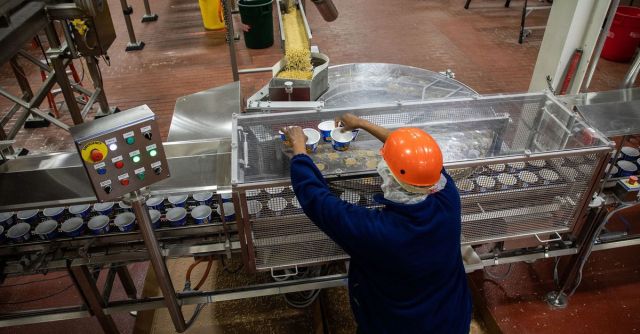
Kraft Heinz is eligible for up to $170.9 million in funding under the program. It’ll use the cash to update and electrify 10 facilities in nine states, including its plant in Holland, Michigan, where it produces those iconic blue packages of mac and cheese.
“It takes a whole lot of heat to dry all that macaroni which produces a whole lot of emissions. And so this project is going to deploy clean tech like heat pumps and electric heaters and electric boilers to slash those emissions 99 percent,” Granholm said in the call with reporters.
Ice cream manufacturing in Vermont, Missouri, and Tennessee will also get an upgrade with up to $20.9 million in funding. Unilever will use the money to replace gas boilers with electric boilers and heat pumps. The goal is to reduce greenhouse gas emissions from producing Ben & Jerry’s, Breyers, Klondike, Magnum, Popsicle, Talenti, and other packaged ice cream products.
Bulleit Whiskey maker Diageo Americas Supply will also replace gas-fired heat with cleaner alternatives thanks to up to $75 million in funding. It plans to use electric boilers and new-fangled heat batteries powered by renewable energy generated on-site at its facilities in Kentucky and Illinois. Diageo is partnering with startup Rondo Energy, which developed the heat battery with funding from Bill Gates’ climate investment fund, Breakthrough Energy Ventures.
Another 12 projects aim to slash carbon dioxide emissions from iron, steel, cement, and concrete production. Five aluminum and copper projects were also selected for funding. These are all materials vital to building out the infrastructure needed to decarbonize the US economy.
Electrifying buildings and machinery can prevent pollution from oil, coal, and gas — but only if the power grid is revamped to run on clean energy. That means laying down many more power lines made up of aluminum and copper and reinforced with steel. Concrete, meanwhile, is the most widely used substance in the world after water and, on its own, generates 8 percent of global greenhouse gas emissions.
The DOE thinks the projects it selected can collectively prevent the equivalent of more than 14 million metric tons of carbon dioxide emissions annually. That would be like taking 3 million gas-powered cars off the road each year. The initiatives are also expected to reduce other kinds of pollution that come from burning fossil fuels, like soot and smog-forming nitrogen oxides. Close to eighty percent of the projects are located in disadvantaged communities, according to the Biden administration. And awardees are required to craft a community benefits plan aimed at including residents and labor groups in the planning process.
Funding for these projects includes $489 million from the Bipartisan Infrastructure Law and another $5.47 billion from the Inflation Reduction Act. The projects selected so far will still have to go through a negotiation process with the DOE before receiving funds. Senior administration officials say the projects were selected based on assessments of their ability to reduce emissions, market viability, speed to deployment, and potential community benefits ranging from new jobs to a cleaner environment.
The Biden administration today announced the largest investment in cleaning up industrial greenhouse gas emissions to date. The Department of Energy (DOE) selected 33 projects across more than 20 states to receive up to $6 billion in federal funding for clean energy technologies. It’s a diverse cohort spanning from mac-and-cheese…
