How an artificial tooth monopoly put the DOJ’s blockbuster Apple antitrust suit in New Jersey

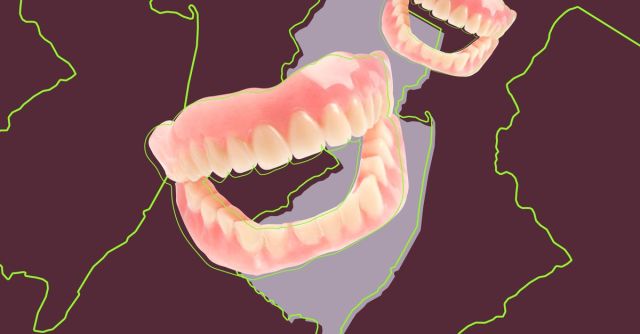
So, what do artificial teeth have to do with the Department of Justice’s massive lawsuit against Apple? Well, they may be one of the reasons why the DOJ decided to file its lawsuit in the state of New Jersey — instead of, say, Virginia or Washington, DC, like it did for Google and Microsoft.
The DOJ previously filed — and won — a similar antitrust case against a company that makes fake teeth in the Third Circuit, which includes New Jersey.
In an interview with The Verge, William Kovacic, the former chair of the Federal Trade Commission and a professor at the George Washington University Law School, explains that “the Third Circuit is a jurisdiction with some pretty good law for plaintiffs on monopolization issues.” He points to the DOJ’s 2004 antitrust lawsuit against Dentsply, a dental supply company that manufactures fake teeth.
“It was a case — low tech — that involved dentures,” Kovacic says. “But they [the DOJ] won and with an opinion that lays out a view of the law that’s going to be good for them here.”
At the time, the DOJ accused Dentsply of maintaining a monopoly in the artificial teeth business. Dentsply made and sold artificial teeth to dealers, who then sold them to dental laboratories to make dentures. But, as outlined in the lawsuit, Dentsply adopted a policy that blocked authorized dealers from adding “further tooth lines to their product offering.” This prevented dealers from selling other brands of artificial teeth to laboratories, allowing Dentsply to “exclude competitors from the dealers’ network.”
While a district court initially ruled in Dentsply’s favor, the Third Circuit reversed this decision and found that the company’s “grip on its 23 authorized dealers effectively choked off the market for artificial teeth, leaving only a small sliver for competitors.” Since the DOJ emerged victorious in this particular case, it may think it’ll have an advantage against Apple here.
“The [Dentsply] case focuses very much on the effort by the dominant firm to use exclusive dealing arrangements to prevent rivals from getting inputs they need to succeed,” Kovacic says. “It’s a principle that the DC Circuit accepted and applied in the Microsoft monopolization case.” The DOJ isn’t hiding the fact that it built much of its case on its antitrust lawsuit against Microsoft, either.
Teeth may not be the only reason why the DOJ chose a New Jersey District Court as its venue. The Verge also spoke with California Attorney General Rob Bonta, who is one of the 16 attorneys general involved in the DOJ’s lawsuit. While Bonta says he wasn’t heavily involved in choosing the venue since the DOJ was mostly in charge of that decision, he does have some understanding of why the DOJ picked New Jersey — and it’s arguably a little less exciting than fake teeth.
“I understand that Samsung is headquartered there [New Jersey], and they are impacted by the anticompetitive conduct and exclusionary conduct of Apple,” Bonta says. The lawsuit lists both Samsung and Google as the two “meaningful competitors” to Apple in the premium smartphone market and specifically points out that Samsung’s US headquarters are “located in this district.”
Additional reporting by Lauren Feiner.
So, what do artificial teeth have to do with the Department of Justice’s massive lawsuit against Apple? Well, they may be one of the reasons why the DOJ decided to file its lawsuit in the state of New Jersey — instead of, say, Virginia or Washington, DC, like it did…
