Who knew you could see plankton from space? NASA, of course. The space agency successfully launched a new mission today called PACE — short for the Plankton, Aerosol, Cloud, ocean Ecosystem satellite — that will study its namesake.
NASA’s new mission will study microscopic plankton and aerosols from space

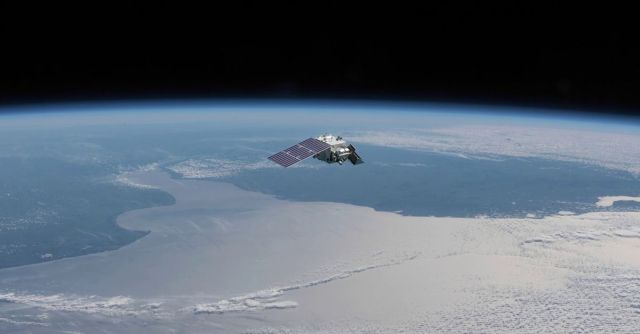
It’ll examine microscopic plants and particles — things so small they’re invisible to the naked eye — from hundreds of miles above Earth. The goal is to better understand how such teeny tiny things can actually impact the whole planet.
“PACE will help us learn, like never before, how particles in our atmosphere and our oceans can identify key factors impacting global warming,” NASA Administrator Bill Nelson, said in a press release.
The goal is to better understand how such teeny tiny things can actually impact the whole planet
Phytoplankton in particular play a vital role in the world’s oceans. NASA even has an entertaining video on YouTube about why they’re “insanely important,” complete with faux action figures of the “microscopic warriors fighting for the sea.” What the video calls “phyto fighters” are actually microscopic plants that take in carbon dioxide and produce oxygen through photosynthesis. It’s that capacity to absorb planet-heating carbon dioxide that makes them a key ally in the fight against climate change.
“Observations and scientific research from PACE will profoundly advance our knowledge of the ocean’s role in the climate cycle,” Karen St. Germain, director of the earth science division in the Science Mission Directorate at NASA Headquarters, said in the press release.
Plankton also form the base of ocean food chains, which makes them extremely important for the health of marine ecosystems and fisheries. There are tens of thousands of different species of phytoplankton that each have unique interactions with their environment: some beneficial and some potentially harmful, like toxic algal blooms called red tides.
While a red tide is an extreme example, different kinds of phytoplankton can make the surface of the sea appear to be different colors — albeit in ways that are often too subtle for the human eye to detect.
The hyperspectral ocean color instrument that the PACE satellite is carrying will make observations across ultraviolet, visible, and near-infrared light spectrums. That’ll allow scientists to differentiate between species of phytoplankton by their unique color for the first time from space. They can use that data to figure out what kinds of organisms are out there and spot changes in the sea that could impact ecosystems and coastal communities that rely on them.
Two other instruments on board the spacecraft will study particles in the atmosphere, specifically aerosols that can affect air quality. “Aerosols are really important to human health, so that’s why we need to really quantify what is out there — like what type of aerosols there are and where they come from,” Meng Gao, PACE polarimetry data science and software lead, says in another NASA video posted in December.
Funny thing is, decades of work cleaning up aerosol pollution has been a double-edged sword. Aerosol particles, and some of the clouds that can form around them, can reflect solar radiation back out into space. So fewer aerosols in the atmosphere might inadvertently hasten global warming. Two toaster-sized instruments on PACE are called polarimeters, which can detect what kinds of aerosols are present based on how they reflect light. Knowing what kinds of aerosols are out there can help scientists fine-tune climate models so they can make more accurate forecasts for the future.
There are also a couple sci-fi-sounding scenarios that this kind of research could feasibly support one day. There’s been some early study into ways to potentially boost phytoplankton’s absorption of carbon dioxide by providing them with more nutrients. There have also been headlines lately about one startup’s rogue attempts at launching aerosols into the atmosphere to try to stop global warming.
The startup quickly faced backlash — including the government of Mexico banning its experiments — because of the potential planetary consequences of attempting to deliberately manipulate Earth’s atmosphere. Tinkering with oceans and the atmosphere in this way falls in the realm of so-called geoengineering, which still faces stiff opposition from researchers and environmental advocates worried about unintended consequences.
The PACE satellite launched from Cape Canaveral Space Force Station in Florida at 1:33AM ET Thursday.
Who knew you could see plankton from space? NASA, of course. The space agency successfully launched a new mission today called PACE — short for the Plankton, Aerosol, Cloud, ocean Ecosystem satellite — that will study its namesake. It’ll examine microscopic plants and particles — things so small they’re invisible…
