The Environmental Protection Agency (EPA) finalized a significantly stricter standard today for fine particle pollution, commonly referred to as soot. It’s the first time in twelve years that the agency has updated the rule to reflect current science and the culmination of a power struggle that has spanned three presidential administrations.
The US strengthens air quality rule for soot

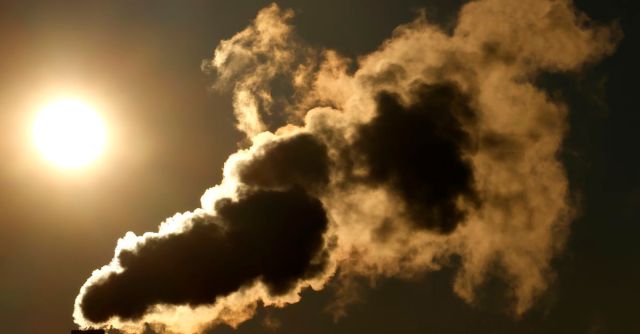
Tackling this kind of pollution is like battling a dragon with many heads — it comes from power plants, factories, vehicles, wildfires, and anything else you can imagine that produces soot. That’s made this rule a major target for both health advocates pushing for more protective policies and industries lobbying to keep current, more lax regulations in place.
For now, at least, health advocates are notching a victory. The updated National Ambient Air Quality Standards finalized today tighten limits on fine particle pollution from 12 micrograms per cubic meter to 9 micrograms per cubic meter on an annual basis. By the EPA’s estimate, that’s enough to avoid 4,500 premature deaths, 800,000 cases of asthma symptoms, and 290,000 lost work days in 2032.
“Those are important numbers, but numbers don’t really tell the whole story.”
“Those are important numbers, but numbers don’t really tell the whole story. The whole story is about people, families and communities that will see cleaner air and live healthier lives as a result of this action,” Doris Browne, former president of the National Medical Association that represents African American physicians, said during an EPA press call yesterday. “We know that communities, particularly communities of color, and vulnerable populations have long been overburdened,” Browne said.
Black and Latino populations are exposed to around 60 percent more soot than is linked to their consumption, according to a 2019 study. That’s compared to a “pollution advantage” that results in non-Hispanic white Americans being exposed to around 17 percent less air pollution than is caused by their consumer behavior.
The rules finalized by the EPA today still aren’t as tough as other health advocates had hoped. The American Lung Association wanted the annual limit set at 8 micrograms per cubic meter. It also pushed, to no avail, for the EPA to tighten 24-hour limits on fine particle pollution to 25 micrograms per cubic meter. The latter measure is supposed to address short-term spikes in pollution from, say, a mishap at a refinery, as opposed to annual limits on cumulative emissions.
To the Lung Association’s disappointment, the EPA decided to maintain the current 24-hour standard that allows 35 micrograms of fine particles per cubic meter. In the call with reporters, EPA administrator Michael Regan defended the action saying, “based on the science, the annual and 24 hour standards work extremely well together to provide protection against long and short term [fine particle pollution] exposures.”
“While the stronger annual particle pollution standard will mean fewer asthma attacks, heart attacks, strokes and deaths, it is disappointing that EPA did not follow the strong science-based recommendations of the Clean Air Scientific Advisory Committee and the health community to also revise the 24-hour standard to more fully protect public health,” Harold Wimmer, president and CEO of the American Lung Association said in a statement.
National air quality standards essentially define what’s considered clean air, forcing state and local officials to keep pollution below those thresholds. The standards are usually updated every five years, but the Trump administration previously threw a wrench in all that. It decided to steamroll over recommendations by EPA experts from the Obama administration, placing fossil fuel insiders at the head of the EPA and Clean Air Scientific Advisory Committee and deciding to keep outdated rules for soot in place in 2020.
The Environmental Protection Agency (EPA) finalized a significantly stricter standard today for fine particle pollution, commonly referred to as soot. It’s the first time in twelve years that the agency has updated the rule to reflect current science and the culmination of a power struggle that has spanned three presidential…
