Diamond-based electronics could help power your laptop one day — as researchers claim hardest semiconductor holds key to carbon-neutrality in energy market

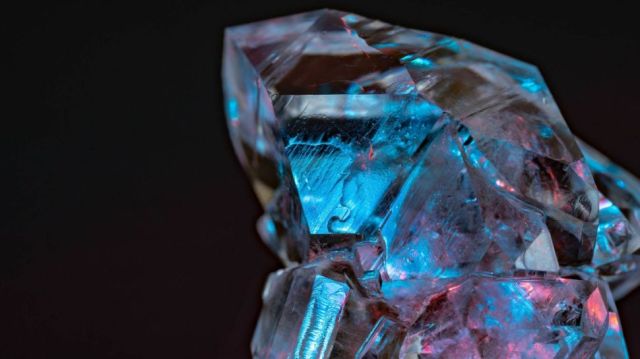
Diamonds might be a girl’s best friend, but diamond-based electronics could be the key to carbon-neutrality in the energy market, potentially even powering your laptop one day, according to researchers.
A new study reveals that diamonds could be more effective than silicon in operating high-voltage power grids, which are crucial for the efficiency of renewable energy.
According to the US Energy Information Administration, the global demand for electricity is projected to surge by nearly 50% by 2050. However, around two-thirds of the generated energy in the U.S. is lost before it reaches the customer, says Can Bayram, an associate professor at the University of Illinois, Urbana-Champaign.
Not without challenges
Bayram suggests that one solution to enhance power grid efficiency is to transition from alternating current (AC) to direct current (DC). A DC grid could potentially reduce AC grid losses by 90%, eliminating the need for rectifiers and decreasing the need for transformers. Moreover, high-voltage DC grids are more efficient at transmitting energy over long distances, making them particularly beneficial for remote solar and wind farms.
Power electronics, which control more than half of the world’s electricity, are essential for supporting these grids. Bayram predicts that this figure will increase to 80% by 2030 due to the rising adoption of renewable energy. He argues that the future DC grid will require power electronics that are faster and stronger than current silicon devices, and that semiconducting diamond could be the answer.
Diamond, the hardest known semiconductor, is also one of the best thermal conductors and has a high breakdown voltage. This means that diamond semiconductor devices can operate at higher currents and voltages with less material, without experiencing a reduction in electrical performance.
Bayram also notes that diamond-based electronics could lead to lower costs in shipping, transportation, and installation due to their lighter weight. However, there are challenges to overcome, such as increasing the thickness of the “drift region” in diamond-based devices, a crucial component in withstanding high voltages.
Despite these hurdles, the research team has achieved record-high breakdown voltages of about 5,000 volts in thin drift layers, demonstrating the lowest leakage current of diamond devices.
“We believe diamond will enter the semiconductor market at high-end power levels, more than 5 megawatts,” Bayram says. “Converters based on diamond will be cost-competitive, because even if the diamond device itself is more expensive than usual silicon devices, the reduction of the semiconductor size and the simplification of the system including the thermal management will significantly reduce the overall cost.”
The scientists detailed their findingsin the journal IEEE Electron Device Letters.
More from TechRadar Pro

Diamonds might be a girl’s best friend, but diamond-based electronics could be the key to carbon-neutrality in the energy market, potentially even powering your laptop one day, according to researchers. A new study reveals that diamonds could be more effective than silicon in operating high-voltage power grids, which are crucial…
