4 reasons why this AI Godfather thinks we shouldn’t be afraid

Don’t you hate it when the godfathers disagree?
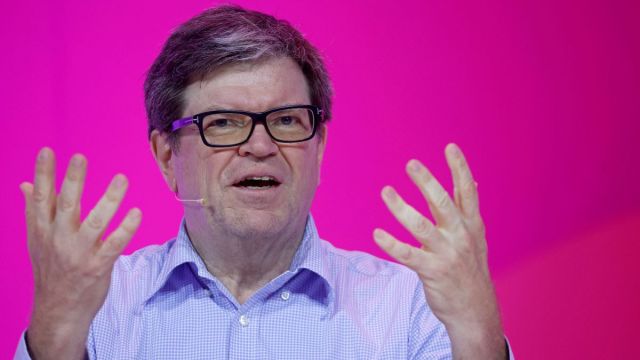
On one side, we have former Google scientist Dr. Geoffrey Hinton warning that we’re going too fast and AIs could ruin everything from jobs to truth. On the other side, we find Meta’s Yann LeCun.
Both scientists once worked together on Deep Learning advancements that would change the world of AI and triggered the flurry of advancements in AI algorithms and large language models that brought us to this fraught moment.
Hinton delivered his warning earlier this year to The New York Times. Fellow Turing Award-winner LeCun largely countered Hinton and defended AI development in a wide-ranging interview with Wired’s Steve Levy.
“People are exploiting the fear about the technology, and we’re running the risk of scaring people away from it,” LeCun told Levy.
LeCun’s argument, which in its TLDR form is something making to, “Don’t worry, embrace AI,” breaks down into a few key components that may or may not make you think differently.
Open is good
I particularly enjoyed LeCun’s open-source argument. He told Levy that if you accept that AI may end up sitting between us and much of our digital experience, it doesn’t make sense for a few AI powerhouse companies to control it. “You do not want that AI system to be controlled by a small number of companies on the West Coast of the US,” said LeCun.
Now, this is a guy who works as Meta’s Chief AI Scientist. Meta (formerly Facebook) is a big West Coast company (which recently launched its own open-source LLM LLAMA 2). I’m sure the irony is not lost on LeCun but I think he may be targeting OpenAI. The world’s leading AI purveyor (maker of ChatGPT and DALL-E, and a major contributor to Microsoft’s CoPilot) started as an open and non-profit company. It’s now getting a lot of funding from Microsoft (also a big West Coast company) and LeCun claims OpenAI no longer shares its research.
Regulation is probably not the thing
LeCun has been vocal on the subject of AI regulation but maybe not in the way you think. He’s basically arguing against it. When Levy asked about all the damage an unregulated and all-powerful AI could do, LeCun insisted that not only are AIs built with guardrails but if these tools are used in industry, they’ll have to follow pre-existing and rigid regulations (think the pharmaceutical industry).
“The question that people are debating is whether it makes sense to regulate research and development of AI. And I don’t think it does,” LeCun told Wired.
AGI isn’t near
There’s been a lot of talk in recent months about the potential for Artificial General Intelligence (AGI), which may or may not be much like your own intelligence. Some, including OpenAI’s Sam Altman, believe it’s on the near horizon. LeCun, though is not one of them.
He argued that we can’t even define AGI because human intelligence is not one thing. He has a point there. My intelligence would not be in any way comparable to Einstein’s or LeCun’s.
You want AI to be smarter than you
There’s little question in LeCun’s view that AIs will eventually be smarter than humans but he also notes that they will lack the same motivations as us.
He likens these AI assistants to ‘super-smart humans” and added working with them might be like working with super-smart colleagues.
Even with all that intelligence, LeCun insists that these AIs won’t have human-like motivations and drives. Global Domination won’t be a thing for them simply because they’re smarter than us.
LeCun doesn’t discount the idea of programming in a drive (a superseding goal) but sees that as “objective-driven AI” and since part of that objective could be an unbreachable guardrail, the safeguards will be baked in.
Do I feel better? Is less regulation, more open source, and a firmer embrace of AI mediation the path forward to a safer future? Maybe. LeCun certainly thinks so. Wonder if he’s spoken to Hinton lately.
You might also like

Don’t you hate it when the godfathers disagree? On one side, we have former Google scientist Dr. Geoffrey Hinton warning that we’re going too fast and AIs could ruin everything from jobs to truth. On the other side, we find Meta’s Yann LeCun. Both scientists once worked together on Deep…
