Google’s new geothermal energy project is up and running

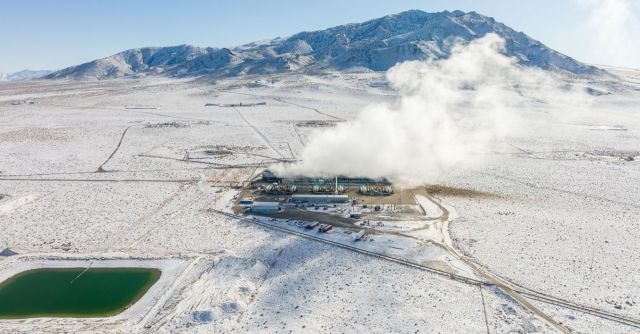
A first-of-its-kind geothermal project is now up and running in Nevada, where it will help power Google’s data centers with clean energy.
Google is partnering with startup Fervo, which has developed new technology for harnessing geothermal power. Since they’re using different tactics than traditional geothermal plants, it is a relatively small project with the capacity to generate 3.5 MW. For context, one megawatt is enough to meet the demand of roughly 750 homes. The project will feed electricity into the local grid that serves two of Google’s data centers outside of Las Vegas and Reno.
It’s part of Google’s plan to run on carbon pollution-free electricity around the clock by 2030. To reach that goal, it’ll have to get more sources of clean energy online. And it sees geothermal as a key part of the future electricity mix that can fill in whenever wind and solar energy wane.
“If you think about how much we advanced wind and solar and lithium ion storage, here we are — this is kind of the next set of stuff and we feel like companies have a huge role to play in advancing these technologies.”
“If you think about how much we advanced wind and solar and lithium ion storage, here we are — this is kind of the next set of stuff and we feel like companies have a huge role to play in advancing these technologies,” says Michael Terrell, senior director of energy and climate at Google.
The project has been in the works since 2021, when Google announced the “world’s first corporate agreement to develop a next-generation geothermal power project.” Geothermal energy takes advantage of heat emanating from within the Earth. But this effort is no ordinary geothermal plant, which would typically draw up hot fluids from natural reservoirs to produce steam that turns turbines.
This new project actually was built on the outskirts of an existing geothermal field where, in Terrell’s words, “there’s hot rock, but there’s no fluid.” To generate geoethermal energy there, Fervo had to drill two horizontal wells through which it pumps water. Fervo pushes cold water through fractures in the rock, which heats it up so it can generate steam back at the surface. It’s a closed-loop system, so the water gets reused — an important feature in a drought-prone region like Nevada.
Fervo also installed fiber optic cables inside the two wells in order to gather real-time data on flow, temperature, and performance of its geothermal system. These are tactics gleaned from the oil and gas industry to tap energy resources that otherwise would have been out of reach.
“This one was super promising to us because it was already leveraging existing technologies that have been used in the oil and gas space,” Terrell says. “And so we felt like it had a lot of potential, and a lot of potential to get online sooner rather than later.” Aside from this deal with Google, Fervo also has backing for its technology by Bill Gates’ climate investment firm Breakthrough Energy Ventures and the US Department of Energy.
Unlike wind and solar farms that are sensitive to weather and time of day, geothermal projects can generate electricity on a more consistent basis. That’s one reason why Google is working to bring more projects like this online.
In September, it announced another partnership with the nonprofit Project InnerSpace to “leverage their respective strengths to address critical challenges facing geothermal development, including the development of a global geothermal resource mapping and assessment tool.”
For now, the company is keeping mum on where else it might try to deploy geothermal energy for its data centers. Data centers are notorious for gobbling up a ton of electricity, using up around 1 percent of global electricity.
A first-of-its-kind geothermal project is now up and running in Nevada, where it will help power Google’s data centers with clean energy. Google is partnering with startup Fervo, which has developed new technology for harnessing geothermal power. Since they’re using different tactics than traditional geothermal plants, it is a relatively…
