Superfast and unbreakable — I hope Xiaomi’s new HyperOS operating system brings to life two extraordinary technologies that the original UK-based HyperOS pioneered

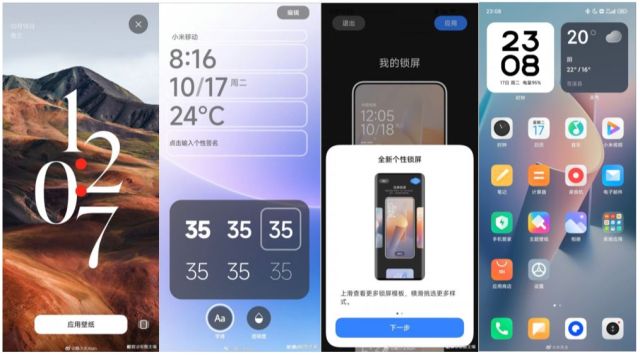
Just over a week ago, Xiaomi CEO Lei Jun announced that the technology company was going to produce its own indigenous Android-based operating system, HyperOS, with its flagship smartphone, the Mi 14, being the first device in the firm’s ecosystem to benefit from the platform.
According to Alvin Tse, Xiaomi’s VP for India, HyperOS benefits from a completely new rewritten architecture that will bring “hyper performance, fluidity and connectivity” across the sprawling range of Xiaomi products. Now I’ve come across another HyperOS in the past, as an innovative UK-based technology startup, and I’d love to see Xiaomi integrate two exciting features from the old HyperOS into the new one.
The original HyperOS was launched almost a quarter of a century ago, in 1999, just as the Millennium bug was about to strike. It built its following and its reputation – till it shut down in the early 2010s – on two products.
The first one was a portfolio of RAM disks; these are basically superfast accelerators that use RAM as storage devices and were several orders of magnitude faster than hard disk drives. That was at a time where SSD were still using SATA interface and therefore hampered by a legacy technology that was ultimately superseded by PCIe.
The second product that caught my attention back in the days was HyperOS 2014, the last in a long series of utilities that allowed the user to run multiple (up to 20) versions of an operating system (Windows in that instance) at any one time, independently from one another. If one OS was compromised or suffered a crash, another one could be used near instantly, ensuring a reasonable amount of redundancy.
Could that be applied to a smartphone?
RAM-based computers are still a rarity because of the price of memory modules but they do exist. RAM servers are popular among VPN providers because they offer additional privacy and security to end users as well as significant performance gains. LPDDR5x is the fastest current memory for smartphones and is far, far faster than current UFS 3.1-based internal storage found on mobile devices.
The importance of fast memory also came to the fore – in a big way – with the growing importance of AI training and inference (albeit in the realm of the GPU). It’s only a matter of time though before AI heaving lifting at the edge becomes mainstream and with it, the focus on system memory and NPU (Neural Processing Units).
Now, if Xiaomi’s vision was to create an all encompassing mobile platform that aspires to offer a best-in-class, superfast mobile experience and rock solid privacy (plus business-grade security) to its 1-billion users, then trying to push RAM-only smartphones and offer multiple instances of an OS for added resilience, could be one mind bogglingly unorthodox way of doing it.
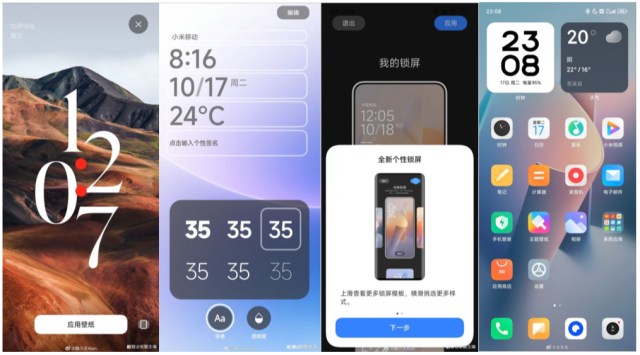
Just over a week ago, Xiaomi CEO Lei Jun announced that the technology company was going to produce its own indigenous Android-based operating system, HyperOS, with its flagship smartphone, the Mi 14, being the first device in the firm’s ecosystem to benefit from the platform. According to Alvin Tse, Xiaomi’s…
