Look out, Nvidia RTX 4070 – AMD’s RX 7800 XT GPU proves surprisingly fast when power usage is dropped

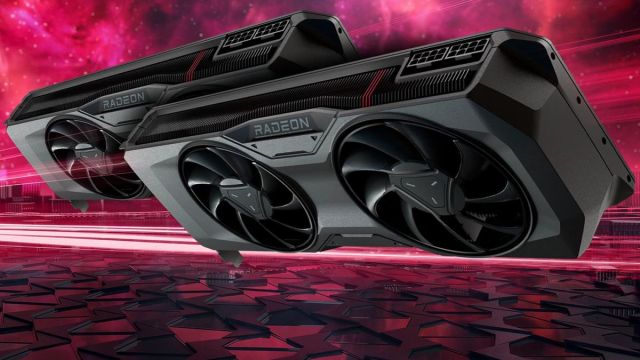
AMD’s RX 7800 XT – currently our best graphics card of the moment – can be run with considerably less power usage than the default, without affecting performance to a huge extent, it seems.
That’s the conclusion of Techtesters, a YouTube channel (from The Netherlands) which conducted testing on a Gigabyte RX 7800 XT Gaming OC graphics card (as highlighted by VideoCardz).
This Gaming OC graphics card runs at a default of 286W of power consumption, as measured by Techtesters, but the YouTube channel reduced that level to a far trimmer 202W.
This was done by a process known as undervolting, which as the name suggests literally involves toning down the voltage supplied to the card, allowing for it to draw far less power.
With that reduction of the best part of 100W of power draw, the resulting game benchmark results did drop – and they obviously would – but many games didn’t run nearly as slowly as you might imagine.
Techtesters found that on average performance dropped by around 9%, which is pretty startling given that the change in power consumption is in a different ballpark (40%). With some games, the difference is a slight as 4% to 5%.
Analysis: Trading blows with the RTX 4070
Of course, we shouldn’t forget that the RX 7800 XT is still 9% slower (on average across a bunch of PC games) than it would have been otherwise, which is not an unappreciable amount. But even with this major power drop applied, it’s still competitive with Nvidia’s RTX 4070 – and indeed the power consumption is pretty even with the 4070 (which is just a smidge under 200W at stock).
The undervolted RX 7800 XT trades blows effectively with the RTX 4070, being markedly faster in some games, and somewhat slower in others – with the net result being a tiny win for AMD (1% faster on average).
Is dropping the power on an RX 7800 XT really worth it, then? Well, that’s very much a personal decision. Some folks may hate the idea of losing anything at all in the way of frame rate smoothness.
However, if you’re running your PC a lot, and do plenty of gaming over a prolonged period of time, that power usage drop will represent a fair saving on your energy bill. And there are other benefits here, too, in terms of the GPU running cooler and quieter, which is always good. There’s nothing worse than an unnecessarily noisy graphics card as a constant background source of irritation when using your PC.
This isn’t the first time we’ve seen a contemporary graphics card undervolted considerably without it making a massive difference to performance, and in some ways, it’s a measure of how hard modern GPU makers run their products by default to eke out that extra bit of performance.
In the case of the 7800 XT, AMD perhaps felt the need to ensure that comparisons against the previous-gen 6800 XT GPU didn’t seem too out of line – as there has been some disappointment around that particular facet of the frame rates of the new RDNA 3 offering, for sure.
You might also like

AMD’s RX 7800 XT – currently our best graphics card of the moment – can be run with considerably less power usage than the default, without affecting performance to a huge extent, it seems. That’s the conclusion of Techtesters, a YouTube channel (from The Netherlands) which conducted testing on a…
