AMD unleashes intriguing new EPYC server CPUs — and its main feature could be key for Ryzen’s future

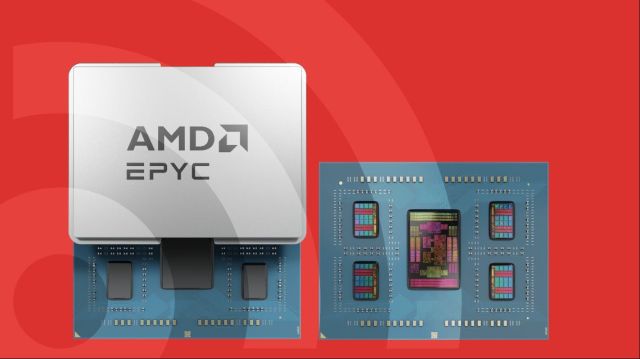
AMD has finally launched its EPYC 8004-series processors, a dozen of them, with a new SP6 socket and up to 64 Zen-4c cores (128 threads). The Siena CPU range completes the family whose other members include Genoa (high performance), Genoa-X (big cache) and Bergamo (cloud native). In AMD’s own words, Siena is a new swim lane in its core roadmap.
The top of the range model, the single-socket 8534P, has a base frequency of 2.3GHz with 128MB L3 cache and a 200W TDP; an network-specialized version (PN) focusing on edge-optimized and communication servers is also available with a lower TDP and lower base frequency but a wider operating temperature range.
Despite being slower, the PN parts will sell for more (about 10% dearer) but overall AMD is still less expensive than the equivalent Intel part. The new processors will go heads on against a plethora of Xeon processors from Intel’s Gold, Silver, Bronze and D-range, operating between 96W and 185W.
None of them though offer the same firepower (they top at 32 cores/64 threads) and memory support (4TB vs 6TB for AMD). AMD’s cherry-picked benchmarks pit the 8534P against a 300W part, the Xeon 8471N which has fewer cores, a smaller cache and a lower clock speed. Even under these conditions, AMD’s Siena come on top.
The new EPYC 8004 Series processors extend AMD leadership in single socket platforms by offering excellent CPU energy efficiency in a package tuned to meet the needs of space and power-constrained infrastructure
Dan McNamara, senior vice president, AMD
Zen 4c coming to Ryzen
Intel launched power and efficiency cores in its consumer range before adopting them for business products. Could AMD do the same with its Zen 4c CPU microarchitecture but from business to consumer? Well it is already happening. AMD introduced it earlier this year as the Ryzen Z1 and could be the first of many models to come. Zen 4c – which powers the Phoenix2 CPU -has the same IPC (instruction per clock) as Zen 4 and it’s actually when it comes to the amount of L3 cache that things differ (actually, there’s a bit more but I’m over simplifying).
AMD disclosed earlier this year that a Zen 4c core is less than two-thirds the size of a full-fledged Zen 3 core. A smaller core is not only cheaper to produce but it also dissipate less heat especially as Zen 4c parts tend to have lower base clock speed. Could it make its way in SMB servers in the future? Don’t discount it.
More from TechRadar Pro
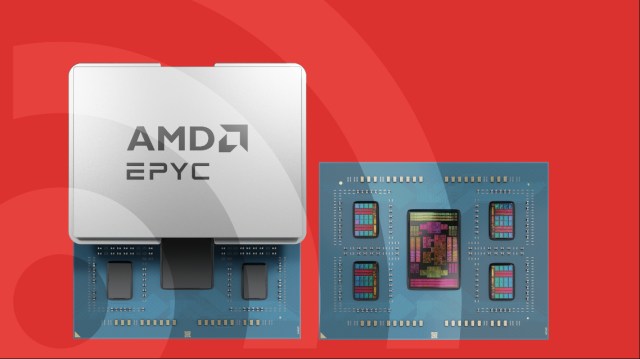
AMD has finally launched its EPYC 8004-series processors, a dozen of them, with a new SP6 socket and up to 64 Zen-4c cores (128 threads). The Siena CPU range completes the family whose other members include Genoa (high performance), Genoa-X (big cache) and Bergamo (cloud native). In AMD’s own words,…
