Ford promises not to sell your driving habits to data brokers
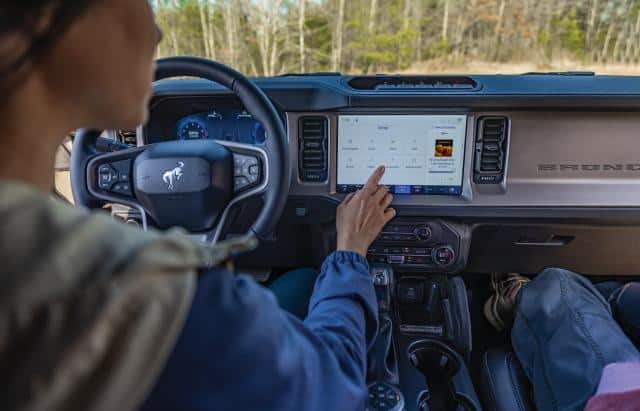
Ford vowed to never sell customer driving data to third-party data brokers as part of a new privacy promise aimed at setting the automaker apart from competitors that have faced legal and regulatory blowback for sharing telematics with data brokers without authorization.
As part of its new promise, Ford says it will strive to protect customer data by using aggregating and anonymizing techniques. It will also “provide clear and easy-to-understand information about how we use your personal information.” And while Ford says it will still use data to improve safety, it will allow customers to adjust how much or how little data they would prefer to share.
In making an explicit pledge not to sell customer data to outside firms, Ford is trying to position itself as one of the better actors in an industry rife with shady practices. “We know that trust is earned,” Kristin Jones, chief privacy officer at Ford, writes in a blog post. “Protecting your personal information is one way we intend to earn it every day.”
“We know that trust is earned.”
— Kristin Jones, Ford’s chief privacy officer
The promise comes in the wake of General Motors agreeing to pay $220 million to settle claims that it illegally sold driver and location information to data brokers. The agreement requires GM to limit the driving data it collects and obtain “express consent” from drivers before collecting their information.
Other automakers have been caught with their hands in the customer data cookie jar. A recent examination of 21 vehicle brands found that every single one transmitted data to at least one third-party domain over Wi-Fi. Over half contacted domains that specialize in advertising, tracking, or analytics (ATA), like Adobe, LexisNexis, and Amplitude, which gather details about your vehicle or driving behavior to sell to insurance companies or target you with ads.
In a recent report, Mozilla crowned modern connected cars “the worst category of products for privacy” ever reviewed. The global nonprofit found that 92 percent of the reviewed automakers provide drivers with little (if any) control over their personal data, with 84 percent sharing user data with outside parties.
Ford said it surveyed over 1,000 US customers, both Ford and non-Ford owners, who agreed that privacy is a top concern while over half of the respondents said they understand that some data sharing is okay. Forty-one percent said they were extremely or very concerned about data privacy in the auto industry, which was less than other groups like social media companies, the government, and financial institutions.
To be sure, Ford’s promise isn’t just words on a screen. In the US, the Federal Trade Commission stops companies from misleading the public through deceptive claims. If Ford publicly promises something like, “We never sell your driving data to brokers” but breaks that promise, the FTC and state attorneys general can step in. They can sue Ford, force the company to sign legally binding agreements to correct the issue, and impose substantial financial fines.
It should be noted that a company’s blog post or public promise is not a legal contract. The actual rules that apply to you are found in Ford’s official privacy policy and connected vehicle terms. Those legal agreements contain standard exceptions that allow Ford to share your data, such as complying with police requests or working with outside service providers. Also, opting out of data sharing does come with tradeoffs. While Ford states that data collection depends on the features you want to use, turning off vehicle tracking or location sharing often disables key features like built-in navigation, remote start, and wireless software updates.
Ford vowed to never sell customer driving data to third-party data brokers as part of a new privacy promise aimed at setting the automaker apart from competitors that have faced legal and regulatory blowback for sharing telematics with data brokers without authorization. As part of its new promise, Ford says…
